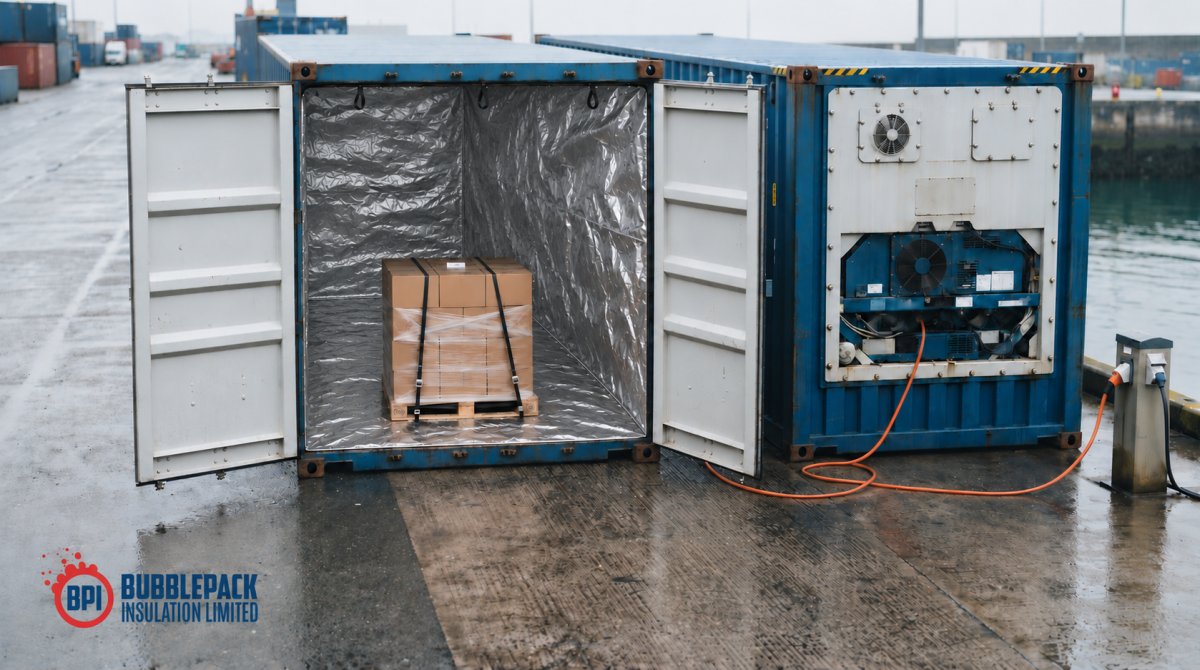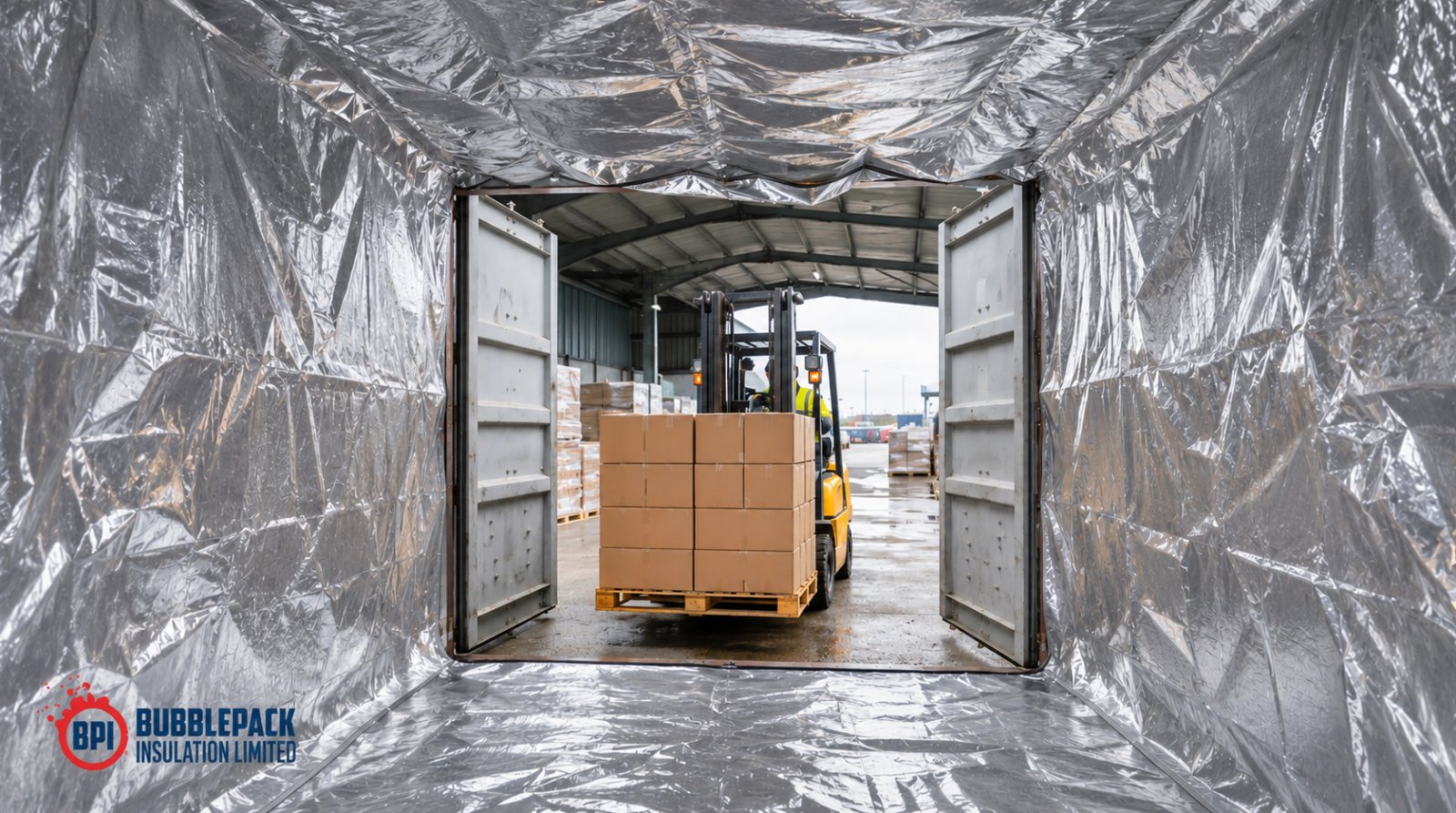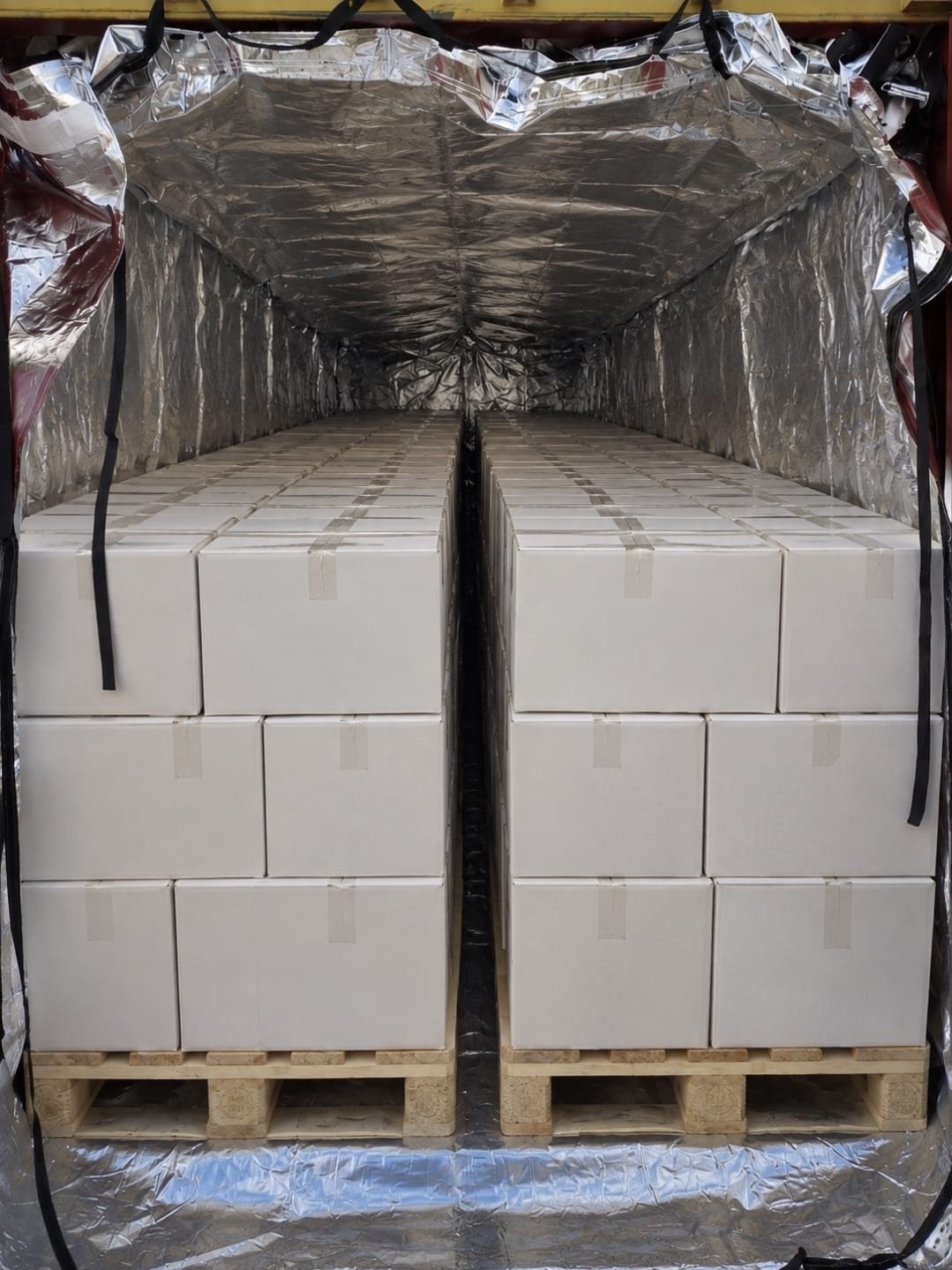
Temperature exposure during international freight can vary substantially between loading, port storage, ocean transit and final delivery. Passive thermal protection uses insulation to slow heat transfer between cargo and its surroundings. It does not actively heat or cool goods or maintain a fixed temperature. Suitability depends on the cargo, loading conditions, route, season and transit duration.
Temperature-sensitive goods may be exposed to changing conditions during loading, port handling and delivery, so consider the whole journey, not just transit time. This guide explains how passive protection works, how door openings and ambient conditions affect cargo, and when a thermal container liner may be appropriate.
You’ll also learn which shipment details shape the choice of protection and how BubblePack’s thermal liners fit into export planning. The aim is to help you assess cargo requirements and select a suitable approach without confusing passive insulation with active temperature control.
Key Takeaways
• Distinguish passive insulation, which slows heat transfer, from a suitably powered refrigerated container that actively controls temperature.
• Assess cargo requirements alongside loading conditions, route, season and transit duration before selecting a liner.
• Account for port exposure and container access when considering how ambient conditions may affect cargo during delivery.
• For pharmaceutical shipments, use documented product-specific temperature requirements and appropriate shipper qualification; match liner selection to the cargo and container plan.
Passive thermal liners and active temperature control
Passive thermal container liners and powered refrigerated containers address cargo temperature risks in different ways. Compare them by considering the level of control required, shipment conditions and overall operating needs.
Active and Passive Container Designs
A suitably powered refrigerated container uses an active unit to regulate conditions in the cargo space, with heating or cooling available according to its operating design. A passive thermal liner has no powered unit; instead, it adds an insulating layer inside the container. Compare the protection each approach provides with the level of temperature regulation the goods require. Reusability alone does not establish sustainability, which depends on how the system is used and its lifecycle.
Temperature Monitoring and Passive Temperature Maintenance
Active container controls operate the refrigeration system and can monitor the cargo space. A separate temperature logger can record conditions during transport, giving the shipper a record to review after delivery. A logger documents readings but does not regulate temperature. A passive liner likewise does not sense or respond to changes. Treat monitoring and protection as distinct parts of the shipment plan.
Temperature Ranges and Shipping Performance
Passive liners do not have a universal temperature range or setpoint. They slow heat transfer, while actual cargo conditions depend on ambient exposure, loading and transit duration. Costs and performance vary with liner configuration, cargo space and shipment requirements, so no single figure applies to every shipment. Compare these factors with the active control the goods require.
Assessing cargo suitability for a thermal liner
Match the protection format to the freight unit and the cargo’s documented requirements. A container liner serves a different purpose from packaging designed for an individual parcel.
How Passive Packaging Works
Passive packaging slows heat transfer around cargo. Some insulated shipping systems also use phase change materials, but BubblePack's thermal container liners do not rely on powered cooling or added refrigerants. A container liner adds insulation inside the shipping container rather than enclosing each item separately. For a palletised food-ingredient load, assess the cargo arrangement and whether container-level or pallet-level coverage is more suitable.
Packaging Options and Cooling Materials
Options include insulated parcel packaging, pallet protection and container liners. Some passive systems also use phase change materials selected for their intended temperature conditions. These approaches are not interchangeable: parcel systems are designed around a smaller load space, while a container liner is selected for containerised freight. Choose according to cargo format, handling and the protection needed throughout the shipment.
Packaging Strengths and Limitations
Passive insulation works without an external power connection, but it cannot actively correct a temperature change. Suitability depends on the product’s documented range, loading pattern, route, season and transit time. For example, a densely loaded container and a partly filled one have different load arrangements. Consider the cargo’s sensitivity to deviations when deciding whether passive protection is sufficient.
Protection Duration and Applicable Standards
Protection duration cannot be generalised across passive packaging systems. Insulated parcel shippers, pallet protection and full-container liners differ in design, cargo mass and exposure conditions. Do not apply performance durations from one system to another without relevant testing. For pharmaceuticals, applicable GDP requirements involve documented transport processes, product requirements, risk assessment and appropriate qualification by the responsible business.
Planning for ambient conditions and container access
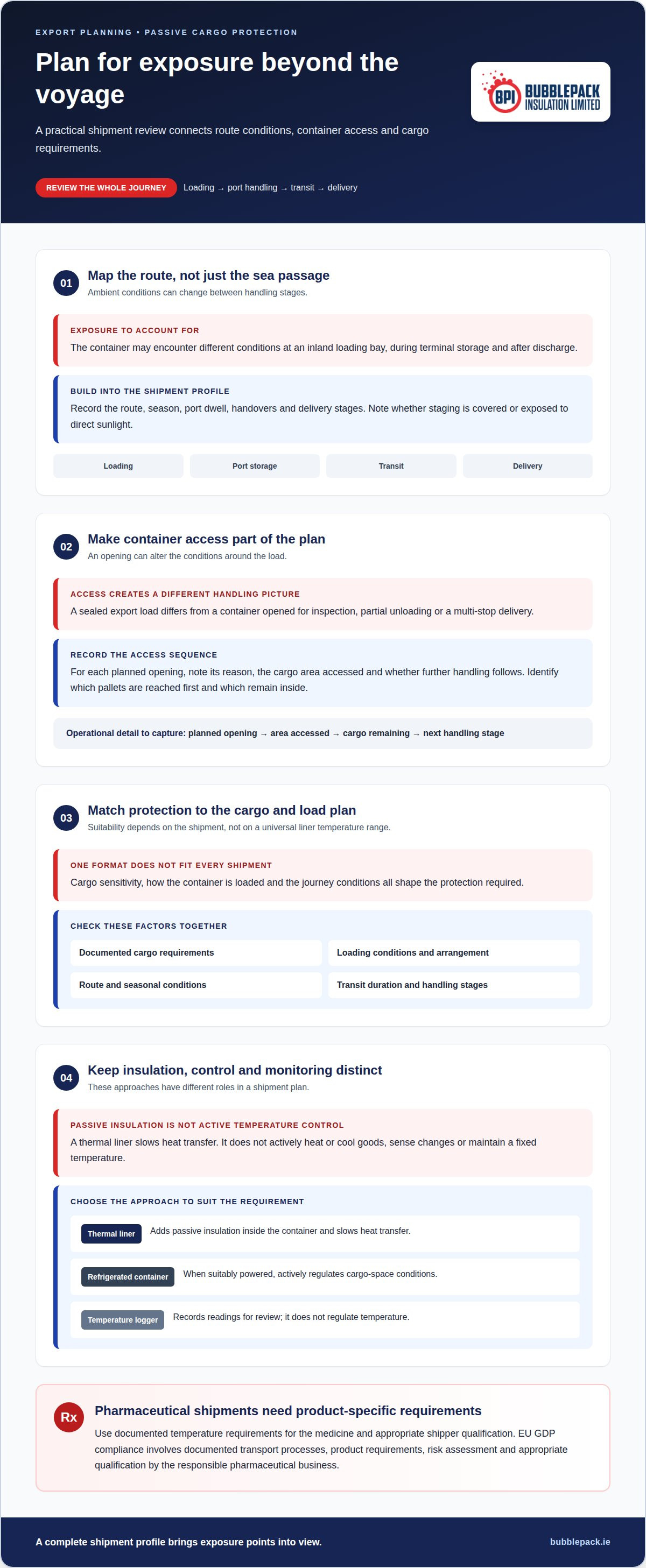
Map the full route from loading to delivery, including port dwell and handovers. A container may encounter different ambient conditions at an inland loading bay, during terminal storage and after discharge. For example, distinguish covered staging from exposure in direct sunlight in the route plan, rather than treating the voyage as the only period that matters.
Record where the container may wait, how cargo moves between handling stages and whether overnight parking is planned. These details describe the exposure profile alongside the route and season. Port operations may involve pauses between arrival, storage and onward movement, so include these stages when assessing whether the selected insulation suits the shipment.
Plan door access around the actual delivery pattern. A sealed export load has a different access plan from a container opened for inspection or partial unloading. Note the reason for each planned opening, the cargo area accessed and whether further handling follows. This gives the logistics team a practical basis for considering exposure during delivery, without assuming every opening has the same effect.
Loading arrangements can influence how access affects the load. If cargo is positioned for staged unloading, identify which pallets or products will be reached first and which will remain inside. For a multi-stop delivery, the access sequence and the cargo remaining in the container matter to the overall handling plan. Keep that sequence aligned with the shipment’s documented requirements and liner configuration.
Bring route, port storage, seasonal conditions and planned access together in one shipment profile. This helps distinguish predictable handling from potential exposure points and supports a more relevant review of passive protection. The result is a clearer operational picture for the supply chain team, based on the container’s planned movement rather than a single estimate of transit time.
Passive thermal protection for sensitive cargo
Passive protection is a risk-management layer, not a temperature-control guarantee. For sensitive cargo, compare documented product requirements with loading conditions, route, season and transit duration. A frozen product, for example, may require active cooling if passive insulation cannot support its specified conditions. The decision concerns the whole shipment, not just the container walls.
Containerised pharmaceuticals need particular care. Use the medicine’s documented, product-specific temperature requirements as the shipping criteria. The responsible pharmaceutical business must also ensure appropriate shipper qualification. A liner does not provide qualification or establish GDP compliance by itself. Pharmaceutical transport processes, risk assessment and qualification remain part of the responsible business’s control framework.
For container loads, assess the cargo space, loading pattern and how the proposed thermal liner fits the wider supply network. A logger can provide shipment records, while the selected insulation only slows heat transfer.
Build the decision around the consequences of deviation. Consider how the cargo responds to temperature changes, the route’s ambient exposure and the time from loading through delivery. Then decide whether passive protection aligns with the documented ranges or whether active temperature control is required. This is especially important when precise conditions apply or a shipment includes several handling stages.
BubblePack Insulation Ltd thermal liner options
BubblePack Insulation Ltd helps exporters assess passive protection by supplying thermal liners for commercial containerised cargo. Its BPI Roll Liner and BPI Integrated Liner provide distinct options matched to the shipment plan and container requirements.
The BPI Roll Liner is a three-layer reflective bubble-foil liner, professionally supplied and installed by BubblePack Insulation Ltd technicians across Ireland. Installation typically takes 20-45 minutes. Irish exporters commonly arrange fitting at an empty-container depot before collection, coordinating the work with the container’s collection schedule.
The prefabricated BPI Integrated Liner is supplied internationally. Its five-layer laminate has 95-97% radiant heat reflectivity, a material property rather than a guarantee of shipment performance. It is available for 20ft, 40ft HC and 45ft containers. Installation typically takes 7-20 minutes, depending on container size, and can be completed by shippers or local installation partners where available.
The Roll Liner covers the intended container walls, ceiling and both door interiors, with floor insulation available as an option. The prefabricated Integrated Liner typically covers the walls, ceiling and floor, while the original steel doors remain uncovered. Both provide passive insulation rather than active temperature control. Suitability depends on documented cargo requirements and the planned journey.
For installation in Ireland, arrange the container type, depot location, collection date, cargo requirements and fitting plan. These details help align the liner configuration and installation with the export movement. For international shipments, consider container dimensions, cargo requirements and the planned installation arrangement when selecting the Integrated Liner.
Contact BubblePack Insulation Ltd to discuss thermal liner options for your cargo.
Make your next shipment plan more resilient
Use your next export plan to connect cargo requirements with the practical realities of transport. A decision about passive temperature control for cargo should sit alongside the route plan. Map handling stages, likely exposure and access needs, then use that operational picture to guide the protection discussion.
This approach also gives your logistics and procurement teams a shared basis for decisions. They can consider where passive insulation fits, what the shipment requires and whether another form of temperature control is needed. For pharmaceutical cargo, keep the product’s documented conditions and shipper qualification central to the planning process.
BubblePack Insulation Ltd can help assess the appropriate thermal liner configuration against the cargo, route and planned fitting arrangements. Contact the team with the container type, shipment details and cargo requirements.
Frequently Asked Questions
How can a thermal container liner help protect export cargo?
A thermal container liner can slow heat transfer while cargo is in transit. It does not cool goods or hold a set temperature. Before dispatch, check that the cargo meets its documented product requirements. Include route conditions and expected transit time in the suitability assessment.
How do I choose the right thermal container liner?
Start with the cargo’s documented temperature requirements, then match the liner configuration to the shipment. Container loads need coverage suited to the container and loading pattern. Check the available cargo space, route, seasonal exposure and expected transit time. If active heating or cooling is essential, passive insulation alone is not the appropriate control system.
What is a thermal container liner?
A thermal container liner is an insulating layer inside a shipping container. It provides passive insulation without external power. It can reduce the rate of heat transfer, but cannot actively cool or heat cargo or set the temperature in the cargo space.
How do I assess a thermal liner for cargo, route and season?
Compare the cargo’s documented requirements with the route’s expected conditions and handling pattern. For example, a beverage load moving through warm port-side staging may face a different exposure profile from one travelling in cooler seasonal conditions. Also account for loading, storage, door access and total transit time. Choose a configuration suited to the shipment rather than relying on a generic temperature range.
What should I consider when shipping cargo with a thermal container liner?
A thermal container liner is insulation, not a coolant system. Assess its suitability against the cargo’s documented requirements, loading conditions, route, season and transit duration. For pharmaceutical cargo, use product-specific requirements and appropriate shipper qualification.
What are the risks and limitations of thermal container liners?
Passive insulation cannot actively correct a temperature change, provide heating or cooling, or maintain a setpoint. Its performance depends on the cargo, loading conditions, route, season and transit duration. Door access and exposure during port handling also affect the shipment’s thermal conditions. Where cargo requires active regulation, a suitably powered refrigerated container may be more appropriate than passive protection alone.