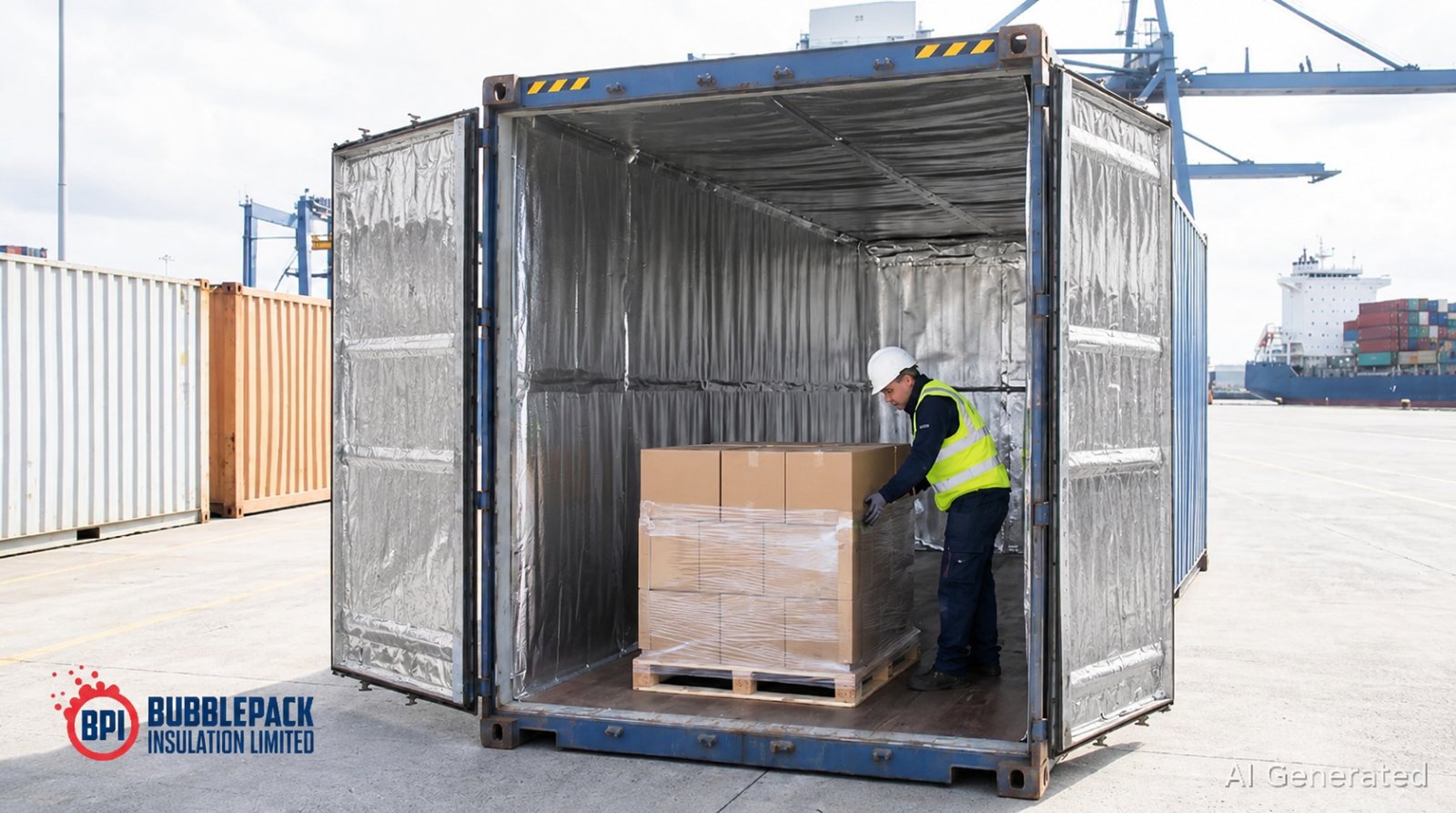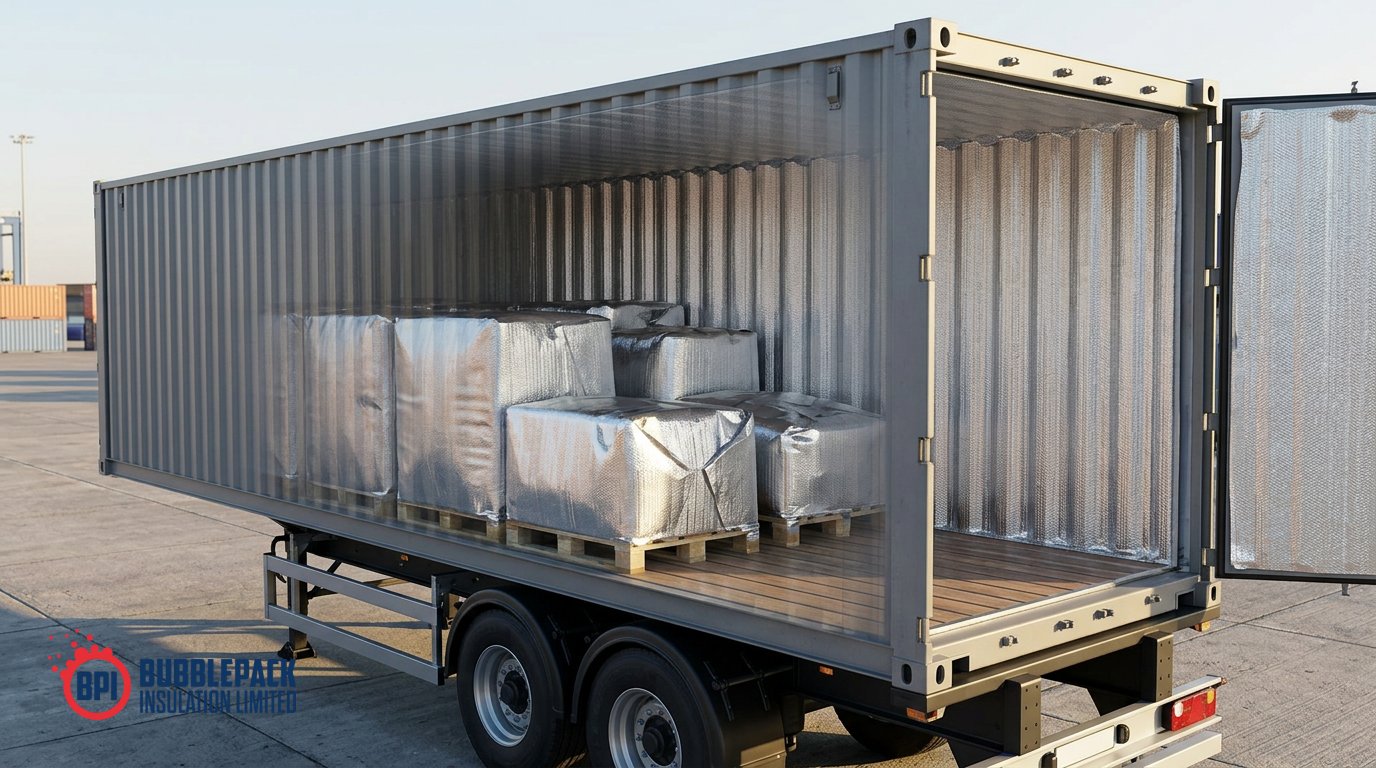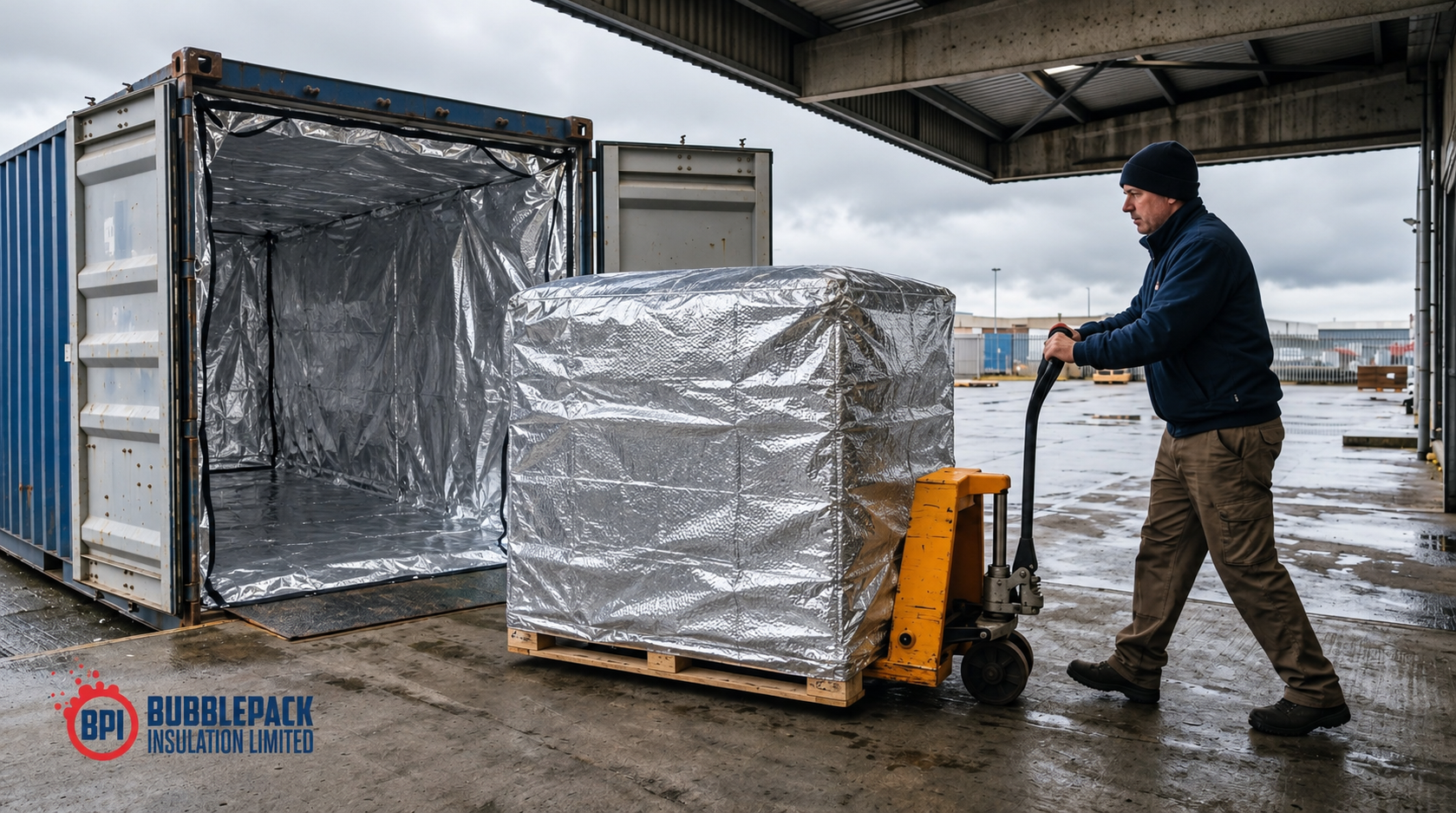
Condensation damage can look like a container leak, but the two have different causes. To understand how to protect cargo from condensation, control moisture before loading and manage ventilation according to conditions. Condensation forms when moist air meets a cooler surface; ventilation helps only when outside air is suitable. Opening vents without considering humidity may introduce more moisture.
For exporters, the damage can extend beyond the goods themselves. Dampness may weaken packaging, mark metal products or create conditions that increase mould risk. Identifying the source helps determine the right response.
This article explains the difference between cargo sweat and water entering through a leak, how temperature changes create condensation, and how ventilation affects moisture inside a container. It also covers practical ways to reduce moisture risks before and during an ocean shipment, including when passive thermal insulation may form part of a cargo-protection plan. The right approach depends on the cargo, loading conditions, route, season and transit duration.
Key Takeaways
• Look for whether moisture is widespread or concentrated near a suspected entry point to help distinguish condensation from a container leak.
• Use ventilation selectively: outside air can help in suitable conditions, but introducing humid air may increase condensation risk.
• Consider how moisture could affect cartons, metal goods and sensitive cargo when planning protection for an ocean shipment.
• Assess whether a BPI thermal liner suits the cargo and route as passive insulation, not as a guarantee against condensation or temperature changes.
How can I tell whether cargo damage came from condensation or a container leak?
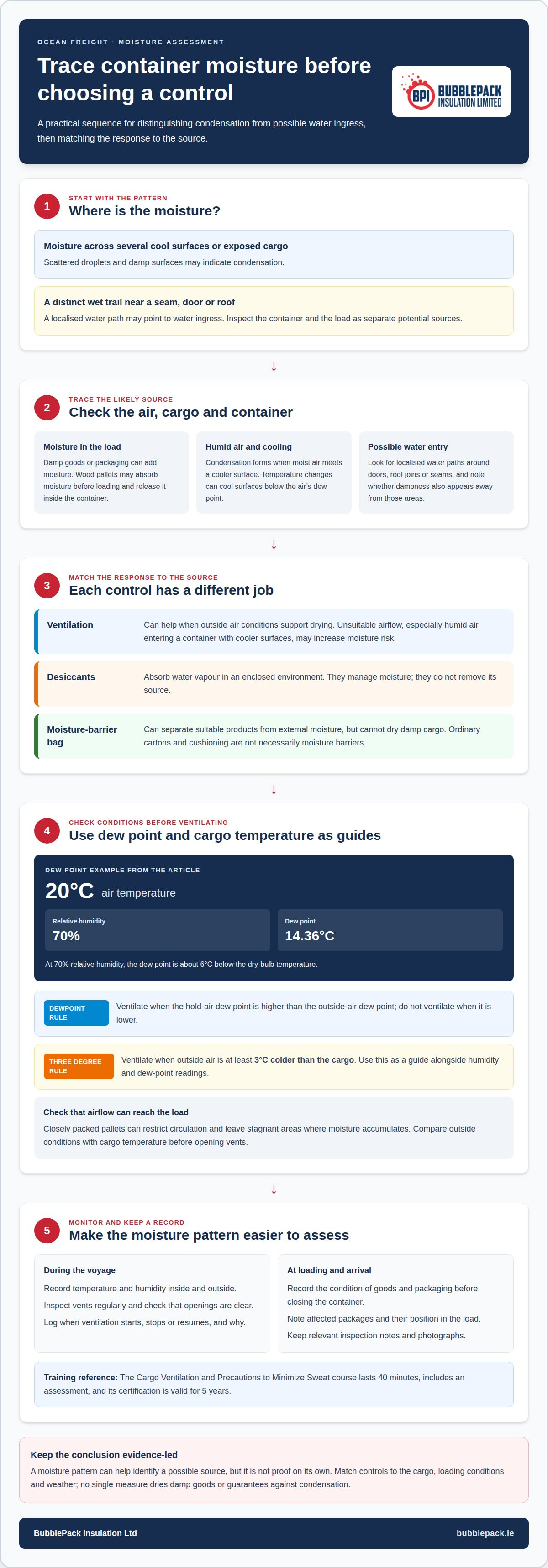
Condensation usually leaves moisture on cooler surfaces or exposed cargo; a leak may leave a localised wet trail near a seam, door or roof. Compare ventilation, desiccants and moisture-barrier bags: each addresses a different source, and none dries damp goods.
Signs of Moisture Damage
Moisture damage is a change to goods or packaging caused by water or persistent dampness. It matters because a wet carton may lose strength, while moisture on metal products can encourage corrosion. For example, compare affected cartons across the load: damage concentrated beneath a roof seam suggests a different pattern from droplets found on several cool surfaces.
Assess the cargo itself, too. Sensitive goods may show visible dampness or deterioration, while outer packaging can conceal moisture inside. Before unloading further, record the location and appearance of damage. Scattered droplets and damp surfaces may indicate condensation, while a distinct water track may point to water ingress.
Moisture Sources in Containers
Moisture can enter with humid air, damp cargo or packaging, and may form when temperature changes cool surfaces below the air’s dew point. Wood pallets can absorb moisture before loading and release it inside the container. This means damage may originate from the shipment itself, even when the container has no obvious opening.
Inspect the container and load as separate potential sources. Look for localised water paths around doors or roof joins, then note whether dampness also affects cargo away from those areas. This distinction helps identify a possible leak or moisture generated across the loaded space.
Choosing moisture controls
Ventilation can regulate temperature, moisture and airflow, but it is suitable only when outside air conditions support drying. Opening vents during humid weather can bring more moisture inside. Desiccants absorb water vapour in an enclosed environment, managing moisture rather than removing its source.
A moisture-barrier bag separates suitable products from external moisture, but it cannot dry damp cargo. Ordinary cartons and cushioning provide physical protection, not necessarily a moisture barrier. Choose controls based on whether moisture comes from the goods, packaging, outside air or a suspected leak. Combine them only when their functions address those sources.
Container ventilation
Condensation risk rises when humid air meets cargo or container surfaces cooled below the air’s dew point. At 20°C and 70% relative humidity, the dew point is 14.36°C.
Matching Ventilation to Cargo and Weather
Choose ventilation based on the cargo’s moisture output and the outside weather. Unsuitable airflow can introduce moisture instead of removing it. Ventilation needs vary with cargo moisture and weather, so airflow should be adjusted to avoid trapping humidity or introducing excess moisture. Compare outside conditions with cargo temperature before opening vents: warm, damp air entering a container with cooler surfaces can increase condensation risk.
Airflow must also reach the loaded space. Closely packed pallets can restrict circulation, leaving stagnant areas where moisture accumulates. When considering how to protect cargo from condensation, assess the cargo arrangement and whether air can move through the load.
Dew Point and Ventilation Rules
The dew point is the temperature at which air becomes saturated and moisture may begin to condense on sufficiently cool surfaces. Comparing inside and outside dew points can inform ventilation decisions where managed ventilation is permitted and the necessary measurements are available. It is not a universal operating rule for standard sealed dry containers, and the cargo's handling requirements must take priority.
The Three Degree Rule is a traditional cargo-ventilation guideline, not a universal instruction for sealed freight containers. It is relevant only where the equipment and cargo permit managed ventilation and the operator has appropriate temperature and moisture information. Do not open, alter or obstruct container ventilation arrangements without the container owner's approval. Cargo-specific requirements and the actual moisture conditions take priority.
For exporters using standard dry containers, focus on practical checks before loading: confirm that the container is dry and sound, use suitably dry cargo and packaging, and record relevant loading conditions. Ventilation during transit is not generally under the shipper's direct control. Where managed ventilation is available, the responsible carrier or operator should follow the equipment instructions and cargo-specific procedures.
Food contamination and damage to water-sensitive goods
Condensation can wet food cartons, ingredients and other sensitive goods during an ocean voyage. Droplets falling from container surfaces may damage labels, soften outer packaging or create conditions for mould and spoilage. With bagged food ingredients, moisture can pass through damaged packaging and affect the product itself. Keep loading records that show the condition of goods and packaging before the container is closed.
Moisture also affects the container and its structure. Repeated dampness can accelerate corrosion on metal surfaces, while wet packaging may lose strength and provide less support to stacked cargo. After unloading, inspect the roof, doors and exposed steel surfaces. A localised water trail can help distinguish possible ingress from moisture distributed across the load.
For ocean shipments, retain records of cargo condition at loading and arrival, alongside relevant inspection notes and photographs. These can provide useful context when assessing a water-damage claim under the applicable cargo insurance policy. Record which packages were affected and their position inside the container, so the evidence shows the damage pattern, not just the final condition.
The operational impact can extend beyond the affected goods. A damaged pallet of dairy ingredients, for example, may need to be isolated while its condition is assessed, delaying handling and disrupting onward supply. Document the affected packages, their position in the container and visible signs of moisture. This evidence helps distinguish damage to exposed outer cartons from suspected effects on the contents.
Base ventilation decisions on the cargo and prevailing weather, rather than relying on open vents throughout a voyage. Outside air can introduce excess humidity when conditions are unsuitable. Desiccants can absorb water vapour in an enclosed space, but they do not remove moisture already held in damp cargo or packaging. Combine moisture-control measures with sound loading practices and checks of the container’s condition.
What is Cargo Sweat?
Cargo sweat is condensation forming directly on goods or their packaging when those surfaces are cooler than the dew point of surrounding humid air. Container sweat, sometimes called container rain when droplets fall from the roof, forms on the container's internal surfaces. Distinguishing these mechanisms helps teams record the affected surfaces and investigate possible causes.
Container Rain and Cargo Sweat
Use precise terms to record where moisture was observed, rather than treating descriptions as interchangeable. Note whether wetness appeared on product surfaces, packaging, the container roof or in several locations. Add photographs and the position of affected pallets to the inspection record. This creates a clearer evidence trail for cargo assessment and helps distinguish isolated damage from a wider pattern.
At unloading, record whether cartons are wet externally, softened, stained or visibly compromised. Keep affected packaging identifiable during assessment, since its outer condition alone may not establish the condition of the contents. A clear record supports handling decisions and preparation for subsequent shipments.
Causes of Container Condensation
Moisture formation depends on the relationship between air humidity and surface temperature. According to the National Oceanic and Atmospheric Administration, air at 100% relative humidity is saturated with water vapour. This helps explain why readings and observations should be considered together, rather than relying on a damp surface alone to identify the underlying conditions.
Before loading, inspect the empty container for wet patches, residue and signs of water entry. Remove debris and let damp interior surfaces dry before placing cargo inside. Pay particular attention to the roof, door edges and floor, then record any remaining signs of moisture before loading begins.
After unloading, note whether the interior is damp and whether packaging or cargo shows corresponding signs. Comparing these observations can help identify where moisture accumulated during transit and inform preparation for a later shipment. Keep the inspection record with the load documentation, especially when similar cargo uses the same packaging or loading arrangement.
BubblePack Insulation: Pallet & Cargo Protection
BubblePack Insulation’s Pallet & Cargo Protection helps exporters assess ways to reduce exposure to temperature changes and moisture-related cargo risks. For container shipments, BPI ROLL LINER and BPI INTEGRATED LINER provide passive thermal insulation. They do not actively control temperature or guarantee that condensation will not occur.
Suitability depends on the cargo’s documented temperature requirements, loading conditions, route, season and transit duration. Container coverage also depends on the selected liner configuration, including whether floor protection is included. These factors help determine whether a thermal liner is suitable alongside appropriate loading and moisture-management measures.
Discuss your shipment requirements with BubblePack Insulation to explore suitable cargo-protection options.
Make the next shipment’s plan cargo-specific
Planning how to protect cargo from condensation means using observations from previous shipments to inform the next load. Note where moisture appeared, which goods or packaging were affected, and whether the pattern pointed to surface condensation or water ingress. These details help focus the protection plan on the cargo’s actual exposure, rather than applying the same approach to every route.
Before arranging protection, bring together the cargo’s documented temperature requirements, packaging sensitivity, loading conditions, route, season and transit duration. For pharmaceutical shipments, include documented product conditions and appropriate shipper qualification. A thermal liner may suit some shipments as passive insulation, but it does not actively control temperature or remove moisture already present.
BubblePack Insulation Ltd can discuss how its cargo-protection options relate to your shipment’s requirements. Contact BubblePack Insulation Ltd to discuss your cargo protection needs and plan the next step with confidence.
Frequently Asked Questions
What Causes Condensation Damage in Ocean Freight Containers?
Condensation damage can develop as a shipment passes through changing temperatures and humidity during an ocean journey. To investigate, compare the cargo’s condition at stuffing with observations at arrival, noting when and where dampness first appeared. This timeline can help identify whether moisture developed during transit or was already present in the goods, pallets or packaging before the container was sealed.
How to Avoid Problems with Condensation in Shipping Containers?
Set cargo-specific moisture controls before loading the container. Include the goods, pallets and packaging in the pre-shipment assessment, and record any dampness or damage before closing the doors. Agree who records the loading condition and who reviews the arrival condition. This creates a consistent process for repeat shipments and gives the team useful evidence to adjust preparation when the same cargo or route is used again.
Is stretch film enough to protect palletised goods from container condensation?
No. Stretch film can help keep a palletised load together, but it should not be treated as a moisture barrier. For example, film around cartons may remain intact while moisture-sensitive packaging still needs protection from water vapour or droplets. Choose outer protection according to the product and shipment risk, and assess whether the goods need a purpose-designed moisture barrier.
What Causes Moisture inside Containers?
Moisture may already be present in the cargo, pallets or packaging before departure, or enter with humid air during loading. Wet cleaning residue can also leave moisture inside the container. A pre-loading condition record should cover both the empty container and the goods being stuffed. This helps distinguish potential sources and direct attention to the relevant part of the loading process.
What does condensation look like inside the container?
Look for droplets, damp marks or water staining on internal surfaces, cargo and packaging. A useful inspection records the location of each sign, rather than simply noting that the load was wet. Photograph the affected area before moving cargo, then compare it with nearby unaffected packages. This location-based record supports a more precise cargo assessment after unloading.
What is the purpose of desiccant bags?
Desiccant bags absorb water vapour within their rated capacity. There is no universal quantity suitable for every shipping container. Selection should consider the cargo and packaging moisture load, container conditions, anticipated temperature and humidity exposure, journey duration and the desiccant manufacturer's guidance. Desiccants cannot dry already wet cargo or repair a leaking container.