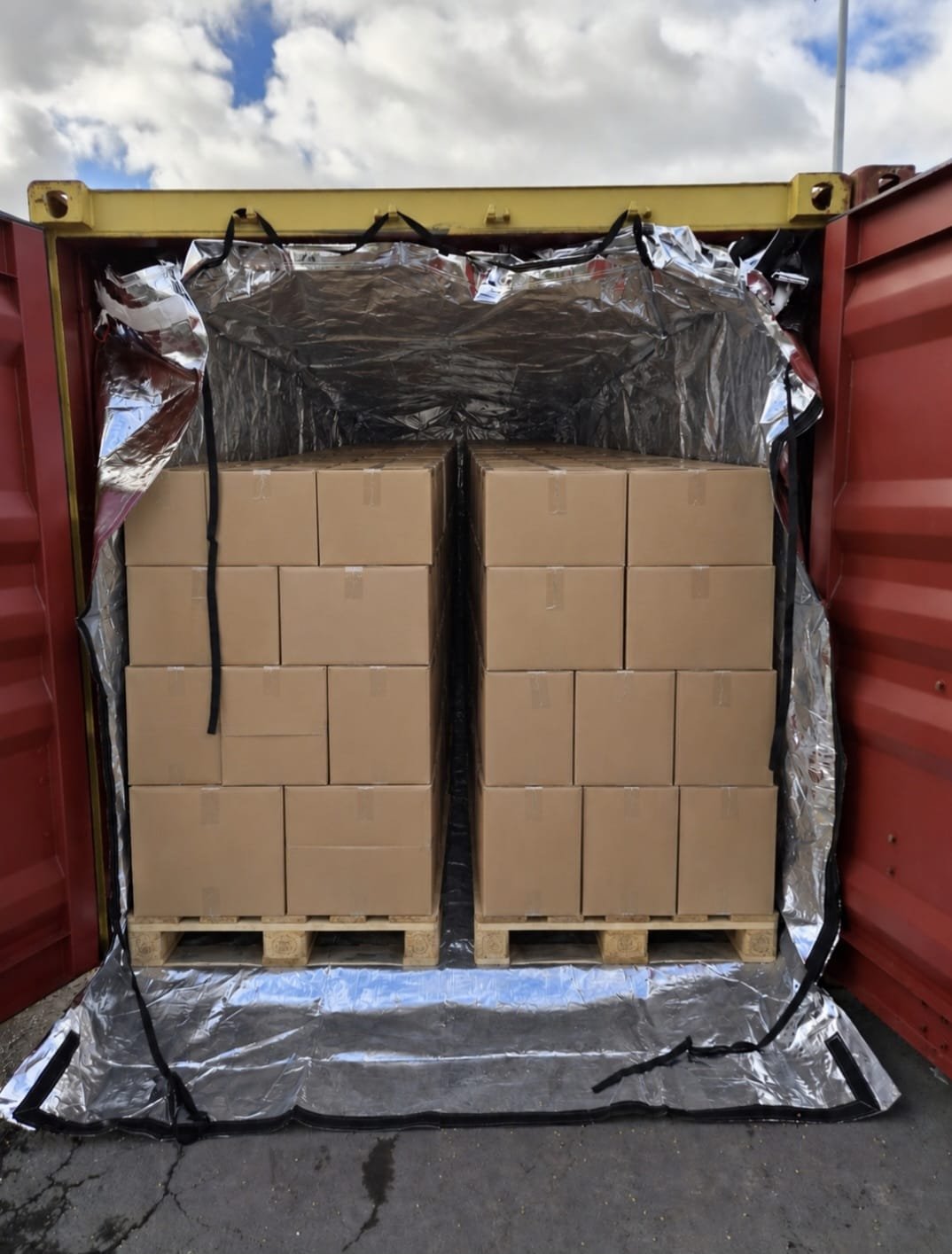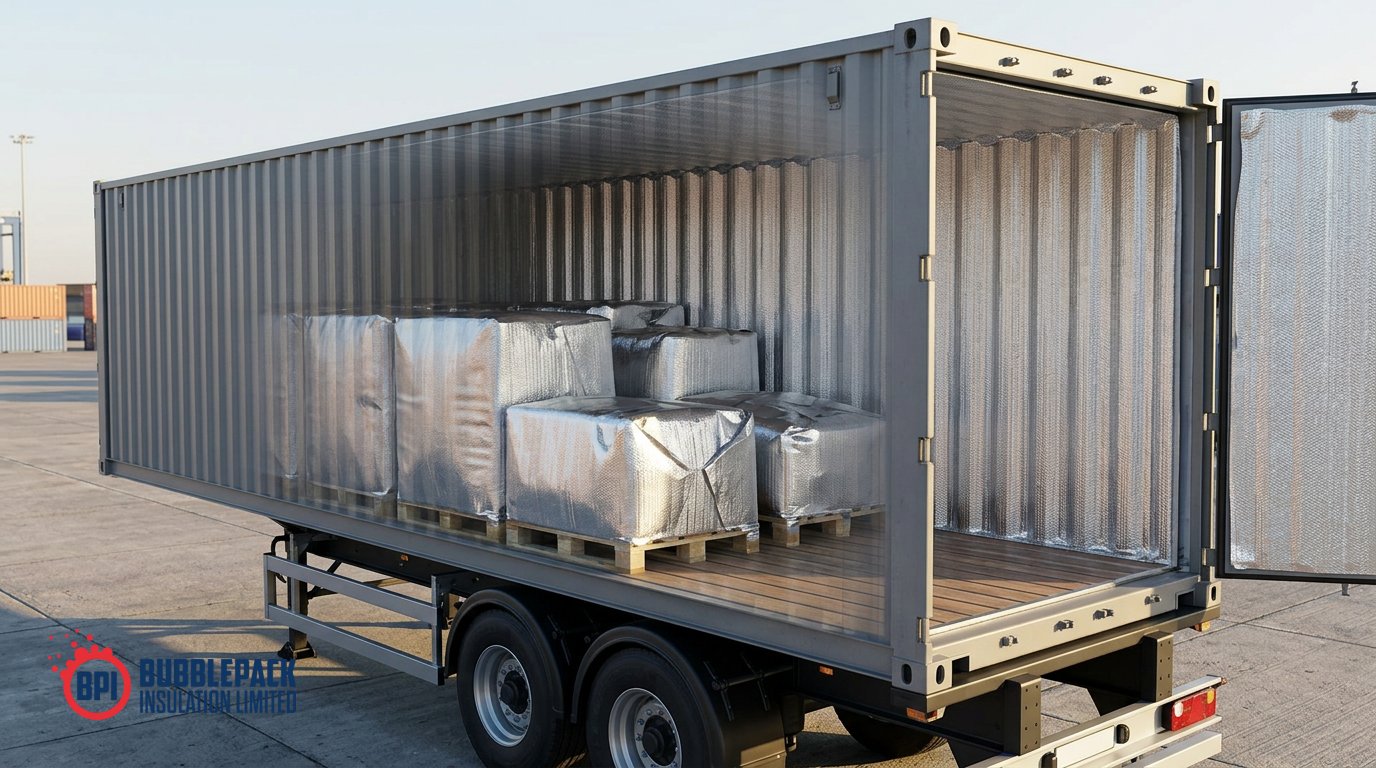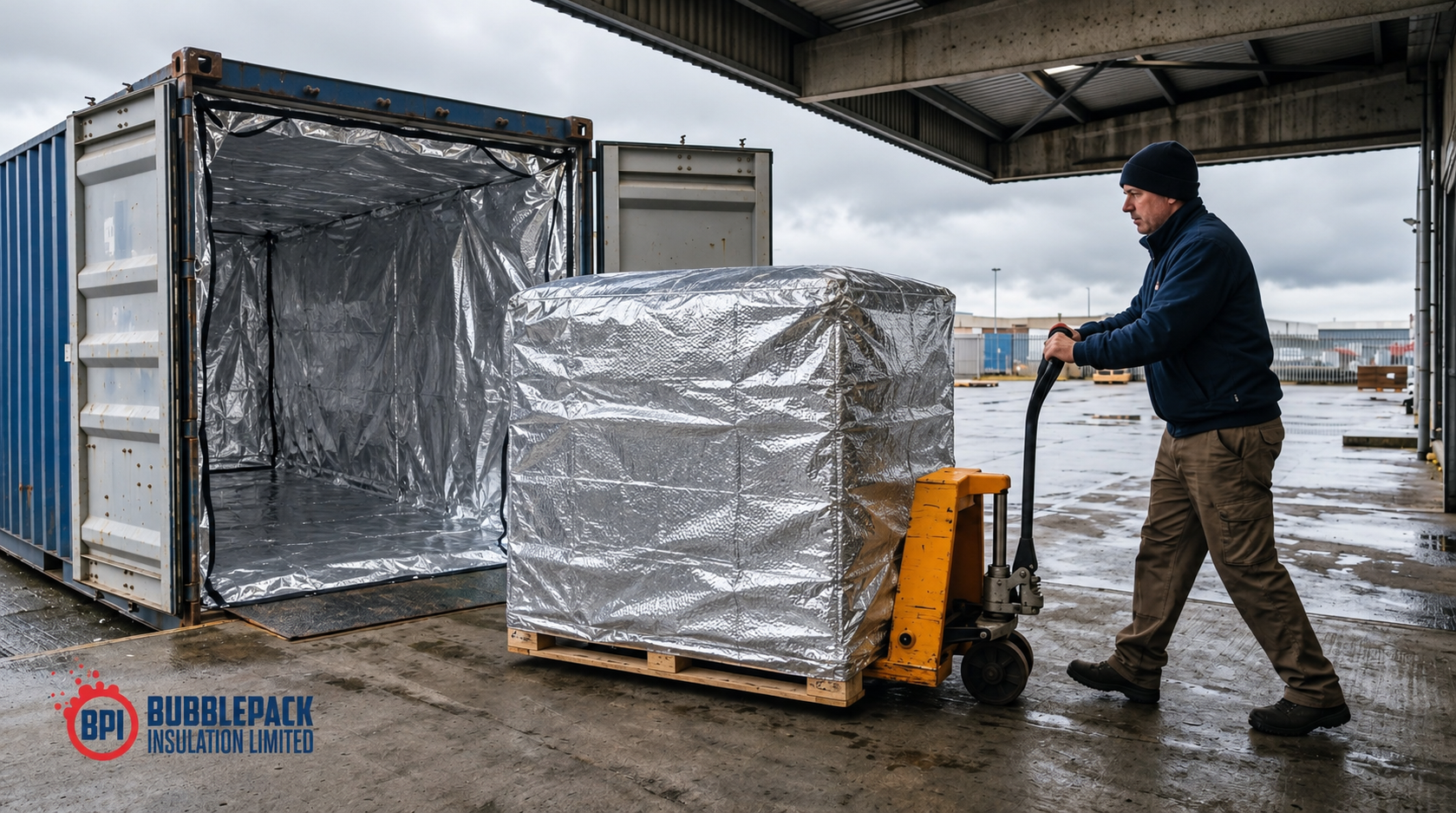
A steel container can expose export cargo to sharp temperature changes and condensation during an ocean voyage. Container insulation for export goods adds passive thermal protection by moderating heat transfer. It can help manage conditions that contribute to condensation, but it does not actively control temperature or guarantee condensation will not form.
Moisture can compromise packaging and goods, but its connection to changing temperatures inside a container is not always straightforward. Insulation can help reduce temperature fluctuations around the cargo. Suitability still depends on the product’s documented requirements, loading conditions, route, season and transit duration.
This article explains how condensation develops, what reflective bubble-foil and prefabricated liner options can offer, and how coverage and installation affect cargo protection. A passive liner is not a substitute for active temperature control when the cargo requires it.
Key Takeaways
• Understand how humidity and temperature shifts can lead to condensation, and why passive insulation cannot guarantee protection from moisture or temperature excursions.
• Assess liner suitability against the cargo’s documented requirements, loading conditions, route, season and transit duration; pharmaceutical shipments also require appropriate shipper qualification.
• Plan Irish Roll Liner fitting around the container type, depot, collection date, cargo requirements and fitting availability. Installation typically takes 20-45 minutes; Integrated Liner installation takes 7-20 minutes depending on container size.
• Explore BubblePack’s Roll Liner and Integrated Liner options to identify a practical approach to passive cargo protection, then contact the company to discuss your shipment.
Condensation risks in export containers
Condensation can form when humid air inside a container meets a colder surface, such as a steel wall or roof. Keep goods and packaging dry before loading, and base ventilation decisions on the cargo’s handling requirements.
Humidity, mould and corrosion
Moisture may come from cargo, packaging, pallets or air trapped during loading. As container temperatures change during an ocean journey, water vapour can condense on cooler surfaces. Wet cardboard can weaken, labels can become unreadable, and moisture-sensitive goods may be affected.
For example, damp cartons of dry food ingredients present a different risk from sealed metal components. Mould needs suitable moisture and conditions to grow, while persistent damp can contribute to corrosion on exposed metal. Review product and packaging requirements, and assess potential damage across the full load.
Thermal and cold bridging
A thermal bridge is a section that transfers heat more readily than surrounding insulated areas. In a shipping container, metal structures can create local differences in surface temperature. A cold bridge describes the same issue from the cooler side: a surface may become cold enough for moisture in the air to condense there.
Check the liner configuration and the areas it covers, including corners, edges and structural features. Uneven coverage can leave exposed surfaces where temperature differences remain. A thermal liner provides passive insulation; it does not actively control temperature or guarantee prevention of condensation, mould, corrosion or temperature excursions.
Sealing gaps and managing condensation
Gaps in coverage can leave parts of the container wall or roof exposed to changing conditions. Assess coverage around edges and access points rather than assuming insulation alone resolves every moisture risk. The selected configuration determines which container surfaces receive protection.
Do not treat sealing every opening as a universal solution. Ventilation choices must suit the cargo and loading plan, since outside air can bring additional moisture. For sensitive products, use packaging specified for the goods, load dry cargo, and avoid obstructing planned airflow through the stow.
These measures can help manage exposure, but cannot remove all sources of moisture during transit. A passive liner moderates heat transfer; it cannot guarantee prevention of condensation, mould, corrosion or temperature excursions. Match packaging, loading and ventilation decisions to the cargo’s requirements and the route’s conditions.
Choosing a thermal liner for an export shipment
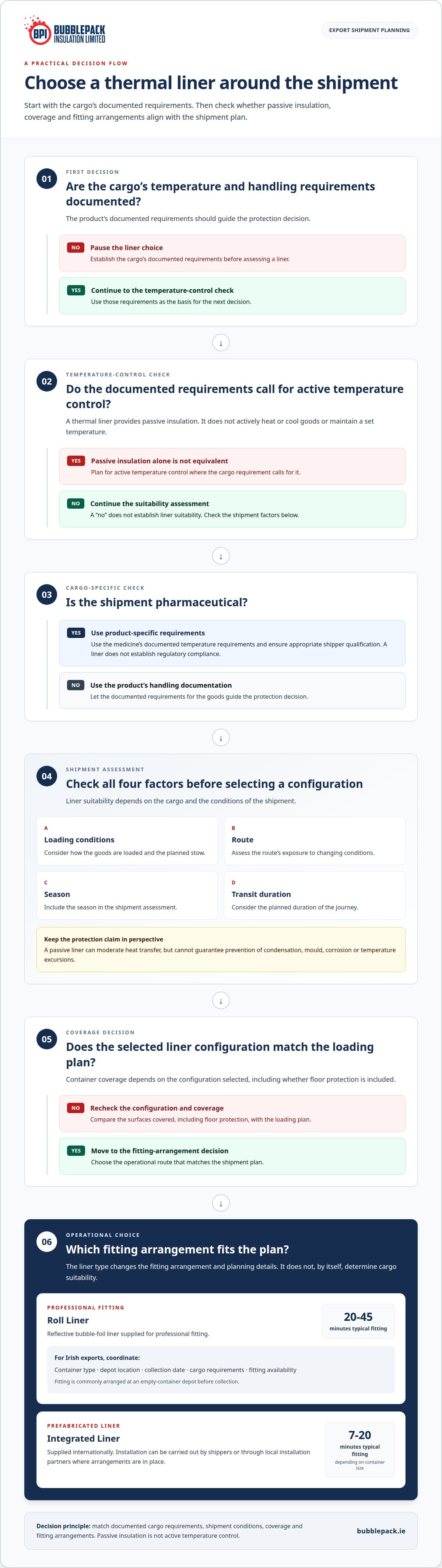
Selecting container insulation for export goods starts with the shipment’s documented requirements, loading conditions, route, season and transit duration. These factors help determine whether passive insulation suits the cargo and how the liner should fit the loading plan.
Across export markets, requirements depend on the cargo and destination, not insulation alone. Pharmaceutical shipments need documented temperature requirements and appropriate shipper qualification; a liner does not establish regulatory compliance. For other sensitive goods, use the product’s handling documentation to guide the protection decision.
Insulation materials
Reflective bubble-foil material and prefabricated liner systems are distinct options for container protection. A roll-based liner is supplied for professional fitting, while an integrated liner arrives prefabricated. Consider the required coverage, cargo handling and available container space when selecting an insulation system.
Container coverage depends on the selected liner configuration, including whether floor protection is included. Match coverage to the loading plan. For example, a shipment loaded directly onto the floor may require a different floor-protection decision from a palletised load.
Assess the cargo’s temperature sensitivity alongside the route’s likely exposure to changing conditions. A liner provides passive insulation; it cannot actively heat or cool goods or maintain a set temperature. Where documented cargo requirements call for active temperature control, passive insulation alone is not an equivalent solution.
Fitting instructions and times
Fitting arrangements differ by system. Roll-based liners are professionally installed, with installation typically taking 20-45 minutes. Integrated Liner installation typically takes 7-20 minutes, depending on container size. These fitting times support operational planning, but they do not determine whether the liner suits the goods.
Do not assume that adhesive fitting, drilling or another attachment method applies to every liner. Likewise, describe insulation as fire-resistant only where that performance is documented for the specific product and intended use. Consider any fire-related requirements alongside the cargo’s documented conditions.
A sound decision about container insulation for export goods considers both shipment needs and practical liner configuration. Discuss your export cargo requirements to identify an appropriate liner approach.
Planning liner supply and installation
For Irish exports, arrange Roll Liner fitting around the container's depot collection. A typical installation takes 20 to 45 minutes, with fitting commonly carried out at an empty-container depot before collection. Allow time to coordinate the fitting slot with depot access and the planned collection date.
Integrated Liner installation typically takes 7-20 minutes, depending on container size. These prefabricated liners are supplied internationally; installation can be carried out by shippers or through local installation partners where arrangements are in place. The installation route therefore depends on the shipment location and the available fitting plan.
To organise a Roll Liner fitting in Ireland, bring these shipment details together:
Container type
identify the container required for the shipment so the fitting can be planned accordingly.
Depot location
specify where the empty container will be made available for installation.
Collection date
provide the planned collection date to coordinate fitting before the container is collected.
Cargo requirements
outline the goods’ documented temperature needs and the planned loading conditions.
Fitting availability
align the depot’s access arrangements with a suitable installation slot.
These details connect liner installation to the export operation rather than treating it as a separate task. For example, a change in collection timing can affect when the empty container is accessible at the depot. Clear cargo requirements also help establish whether passive insulation suits the shipment, considering its route, season and transit duration. A thermal liner does not provide active temperature control if the goods need it.
Allow for coordination as well as the fitting time. The Roll Liner’s 20-45-minute installation and the Integrated Liner’s 7-20-minute installation are fitting durations, not estimates for depot scheduling or the wider export process. Keeping the container type, location, collection date, cargo needs and fitting availability together gives the parties involved a practical basis for arranging the work.
Contact BubblePack to arrange liner supply and fitting with your container and shipment details.
BubblePack Insulation
BubblePack Insulation helps exporters assess passive thermal liner options against shipment requirements, loading plans and container logistics. The aim is to select protection suited to the cargo and operation, not to treat a liner as active temperature control or a guarantee against condensation. That distinction matters when changing route conditions meet sensitive goods.
The BPI Roll Liner is a three-layer reflective bubble-foil system, supplied and professionally installed by BubblePack across Ireland. Fitting is commonly arranged at an empty-container depot before collection. This option suits Irish exporters who need a liner installed while an empty container is being prepared for loading, with depot location and collection arrangements built into the plan.
The BPI Integrated Liner is a prefabricated option supplied internationally. It is available for 20ft, 40ft HC and 45ft containers, and can be installed by shippers or through local installation partners where arrangements are in place. The Integrated Liner uses a five-layer laminate with specified radiant heat reflectivity of 95 to 97%. These specifications apply across BubblePack's Integrated Liner range and describe material properties, not a guaranteed cargo temperature outcome for an individual shipment.
Container coverage depends on the selected liner configuration, including whether floor protection is included. Consider the loading plan, the goods’ position and the usable container space required. The selected coverage determines which surfaces are protected. These details help distinguish liner requirements from other cargo protection needs.
For dairy ingredients, beverages and suitable industrial cargo, the discussion can focus on documented product conditions, route, season and transit duration. Pharmaceutical shipments need documented temperature requirements and appropriate shipper qualification; a liner alone does not establish GDP compliance. BubblePack helps match a suitable liner option and configuration to the export operation, while making the limits of passive protection clear.
Contact BubblePack Insulation to discuss your export shipment and liner requirements.
Build cargo protection into the next shipment plan
Before the next booking is fixed, bring the cargo owner, logistics team and procurement together around a single shipment brief. Record the product’s handling conditions, planned loading arrangement and route assumptions, then assign responsibility for container preparation. This gives each function a shared basis for choosing a liner and coordinating preparation with collection and loading schedules.
Decide on container insulation for export goods during shipment planning, rather than waiting until operational arrangements are settled. Include it in the export review when cargo profiles, packaging or loading sequences change between consignments. Clear ownership connects the protection plan to the actual shipment instead of relying on assumptions from a previous load.
For a practical discussion about your next export movement, contact BubblePack Insulation about your shipment. Share the shipment context so the conversation can focus on the decision ahead. Each consignment is an opportunity to plan cargo protection with greater clarity, starting with the details that define the shipment.
Frequently Asked Questions
What factors should you consider when choosing container insulation?
Consider the container type, cargo requirements, loading conditions, route, season and transit duration. Check the planned loading sequence with the people packing and handling the goods. BubblePack supplies Roll Liners and Integrated Liners for shipping containers; assess which option is suitable for the shipment’s documented requirements.
What are the different types of insulation material?
For export containers, BubblePack supplies two thermal liner options: the Roll Liner, a reflective bubble-foil liner professionally supplied and installed across Ireland, and the prefabricated Integrated Liner, supplied internationally. Review the product documentation and intended freight use when assessing suitability for your container and cargo.
How do BubblePack’s container liners suit different shipments?
BubblePack’s Roll Liner and Integrated Liner provide passive insulation. They do not actively heat, cool or maintain a set temperature. Assess suitability against the cargo’s documented temperature requirements, loading conditions, route, season and transit duration. Where active temperature control is required, a suitably powered refrigerated container may be appropriate.
What types of container insulation are used for export goods?
Export containers may use passive thermal liners or active temperature-control equipment. BubblePack supplies Roll Liners and Integrated Liners for passive insulation; a suitably powered refrigerated container actively controls temperature. These serve different operational purposes. A passive liner cannot provide active temperature control.
How do I assess a container liner for export shipping?
Review the specific liner’s product documentation, container coverage and intended application, then compare these with the container and cargo plan. BubblePack supplies Roll Liners and Integrated Liners. Suitability depends on the shipment’s documented requirements and operating conditions, rather than the product name alone.
How do you choose container insulation based on cargo type and shipping route?
Start with the cargo’s documented requirements, then consider the planned movement, including route, season and transit duration. Determine whether passive insulation is suitable or active temperature control is required. Keep the assessment with shipment records so operational teams can work from the same protection plan.