A shipping container does not always need insulation, but cargo requirements and the route can make thermal protection an important part of the plan. Thermal cargo protection for freight forwarders means assessing whether passive insulation can help slow heat transfer in transit, not treating it as a substitute for active temperature control.
Weigh the protection required against cost and service expectations. Damaged goods or a cargo claim can affect both the shipment and the customer relationship. Thermal cargo covers and container liners add an insulating barrier, but they do not heat, cool or hold cargo at a fixed temperature.
This article explains how thermal cargo covers work, when shipping container insulation may suit an export shipment, and which factors shape that decision: the cargo’s documented temperature requirements, loading conditions, route, season and transit duration. It also explains how insulation can fit alongside refrigerated transport, and what freight forwarders should consider when managing transit risks, costs and customer relationships.
Key Takeaways
• Distinguish container liners from pallet covers and active temperature-control equipment to identify the right protection approach.
• Assess cargo requirements alongside loading conditions, route, season and transit duration before selecting insulation.
• Account for port exposure and handling changes when evaluating temperature-related transit risks.
• Understand the different supply and installation arrangements for BubblePack’s Roll Liner and Integrated Liner.
Thermal Cargo Protection for Temperature-Sensitive Freight
Export cargo can face heat and cold at several points in transit. Choose protection that matches the goods and the transport plan.
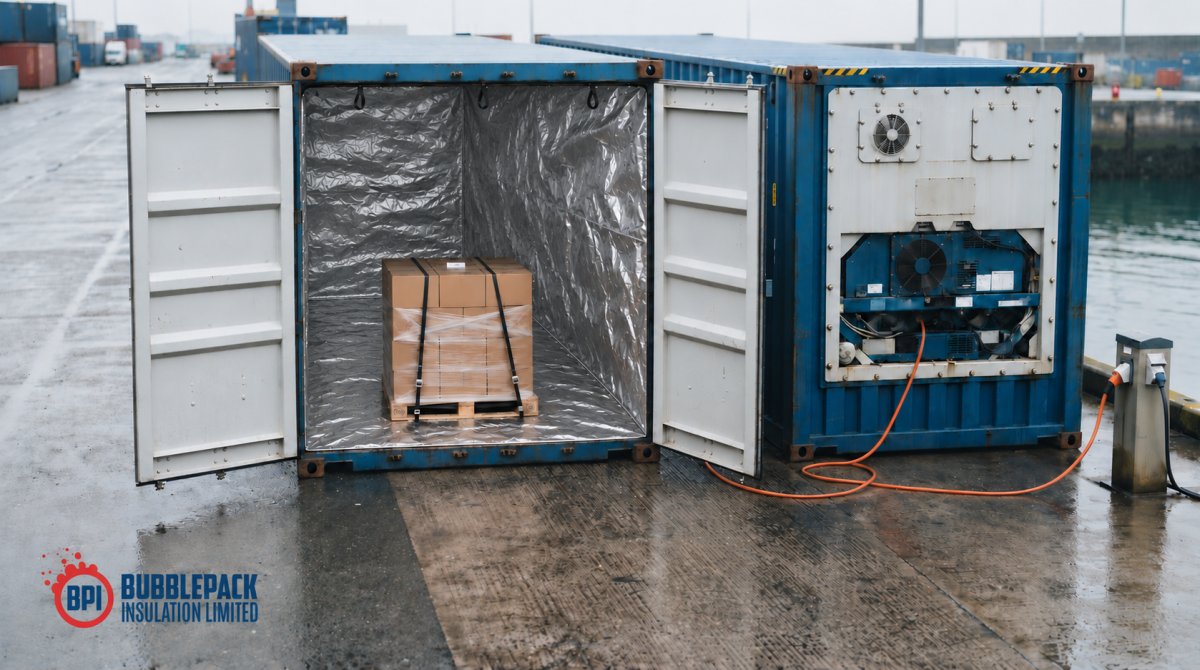
Options include insulated packaging around individual products, pallet covers for palletised loads, container liners and active temperature-controlled equipment. These solutions differ in what they protect and whether they control temperature. A suitably powered reefer provides active control; passive insulation does not.
Passive protection for temperature-sensitive freight
A thermal cargo cover is an insulating barrier used around freight or inside a container. It helps slow heat transfer rather than heating or cooling the goods. For forwarders, this distinction matters when coordinating protection for a whole container or selected pallets. The right coverage depends on the cargo configuration and protection plan, not simply on the word “cover”.
Temperature control across cold-chain stages
The cold chain includes loading, transport, storage and distribution to the destination. Temperature requirements vary by cargo, so no single range applies to every perishable product. A dairy ingredient, beverage and pharmaceutical consignment may each have different documented conditions. Align handling and equipment across every handover, including storage between transport legs.
When selecting a carrier, check that its equipment and monitoring arrangements match the shipment’s documented requirements. Clarify who manages temperature records and communicates issues at handovers. For pharmaceuticals, product-specific conditions and appropriate shipper qualification remain central to transport planning. A thermal barrier may be part of the plan, but it does not replace active control when the cargo requires it.
Assessing Whether Cargo Needs Thermal Insulation
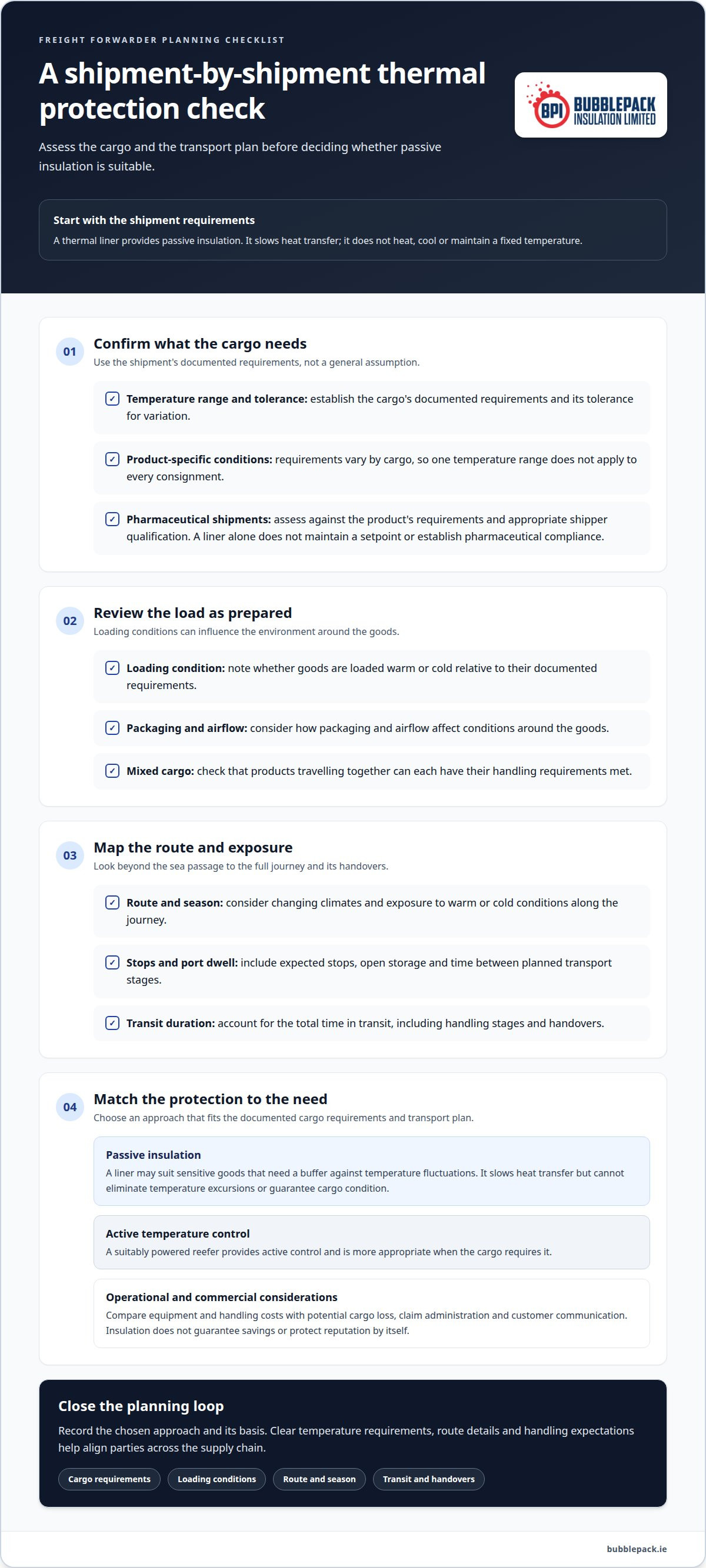
Start with the cargo’s documented temperature range and tolerance for variation. A suitably powered reefer provides active control; passive insulation slows heat transfer. If pharmaceuticals require controlled conditions, use their product-specific requirements and appropriate shipper qualification to assess the transport plan. A liner alone cannot maintain a setpoint or establish pharmaceutical compliance. Effective thermal cargo protection for freight forwarders begins with those documented requirements.
Next, consider loading conditions. Goods loaded warm or cold can influence the temperature inside a container, while packaging and airflow affect the conditions around the goods. For example, chemicals with different handling requirements should travel together only if each product’s needs can be met. Assess the load as prepared, not just the equipment selected.
Route and season shape exposure. A container crossing warm regions, travelling in cold weather or waiting at a port may face changing external conditions. Transit duration matters too: the longer the journey and handovers, the more time ambient temperatures have to affect cargo. Review the full route, including expected stops and handling stages, not just the sea passage.
Compare protection options against operational and commercial consequences. A liner may suit sensitive goods that need a buffer against temperature fluctuations, while a reefer is more appropriate when active control is required. Consider equipment and handling costs alongside potential cargo loss, claim administration and customer communication. These factors inform the decision: insulation does not guarantee savings or protect reputation by itself. Choose passive protection only when it suits the shipment’s requirements.
Record the chosen approach and its basis in shipment planning. Clear temperature requirements, route details and handling expectations help align parties across the supply chain. For a practical discussion of container insulation against your cargo and route, share your shipment requirements.
Environmental and Operational Risks During Transit
On ocean routes, containers can cross changing climates before reaching their destination. Steel walls absorb external heat and can contribute to internal warming; cooler conditions can draw heat away. Humidity and water salinity also expose cargo and equipment to demanding conditions. The level of risk depends on the route, season and time in transit.
Port dwell creates another point of exposure. Containers may wait in open storage between vessel discharge and onward transport, under strong sun or cold conditions. Terminal handling can extend the time between planned stages. A passive liner may slow heat transfer, but cannot eliminate temperature excursions or guarantee cargo condition.
Loading creates distinct risks. Goods loaded outside their documented temperature requirements may begin the voyage in unsuitable conditions. Poor stowage can obstruct airflow in a reefer, while damaged packaging can expose sensitive products to physical impact. Align cargo requirements, loading conditions and selected equipment before dispatch.
Every handover in international logistics matters. A container may move from a factory to a terminal, vessel, port storage area and delivery vehicle. Delays, missed collection windows or unclear instructions can complicate temperature control and monitoring. Recorded handovers help teams identify where conditions changed and respond using relevant shipment information.
Match mitigation to the hazard: use active reefer control when cargo requires it, and consider passive insulation when route conditions call for a buffer. Select packaging for the load, and maintain equipment checks and temperature records in line with the cargo plan. If a reefer uses a generator set during a powered handover, include that transfer in operational arrangements.
What Thermal Cargo Protection Covers for Freight Forwarders
For a freight forwarder, thermal cargo protection covers the measures in a shipment plan for managing exposure to ambient temperature changes. These may include container insulation, pallet covers, suitable packaging, active reefer control and agreed handling procedures. The right scope depends on the cargo, load format and transport arrangements, not on the word “cover” alone.
Forwarders can coordinate how these measures fit together throughout the movement. For example, a container liner may protect a full load, while a pallet cover protects selected palletised goods. The shipment plan should specify which cargo is protected and how the chosen equipment meets the shipper’s requirements.
Protection also requires operational coordination. Align instructions with the shipper, carrier and receiving team, including who manages temperature monitoring and communicates relevant changes. Clear handover information helps teams understand the planned controls during loading, storage and delivery, especially when a shipment changes transport mode.
Insulation does not provide monitoring or active temperature control. It cannot heat or cool freight, hold it at a setpoint, or guarantee that temperature excursions or cargo damage will be avoided. Where a shipment requires active control, suitably powered reefer equipment serves a different purpose. Keep the protection plan consistent with the cargo’s handling requirements.
To discuss how container protection could fit an export movement, share your cargo and route requirements.
BubblePack Insulation Ltd: Thermal Container Liners for Cargo Protection
BubblePack Insulation Ltd supplies passive thermal container liners for exporters assessing cargo needs, routes and loading arrangements. The BPI Integrated Liner is a prefabricated option supplied internationally. It is available for 20ft, 40ft HC and 45ft containers, with fitting by shippers or local installation partners where arranged.
Its five-layer laminate has 95-97% radiant heat reflectivity. Typical installation takes 7-20 minutes, depending on container size. These figures describe the product and fitting, not guaranteed temperature outcomes during a shipment. A liner provides passive insulation; it doesn’t actively heat, cool or maintain a setpoint. Container coverage depends on the selected configuration, including whether floor protection is included.
For Irish exports, the BPI Roll Liner offers a different arrangement: reflective bubble-foil insulation, professionally supplied and installed by BubblePack’s own technicians across Ireland. Its three-layer construction is suited to container-based cargo protection. Installation typically takes 20-45 minutes. It is commonly arranged at an empty-container depot before collection, rather than fitted by the shipper.
Planning the Roll Liner fitting means arranging the container type, depot location, collection date, cargo requirements and fitting availability. These details connect the liner installation with the export schedule. The prefabricated Integrated Liner offers an international supply route for shipments beyond Ireland, with installation by shippers or local partners where arranged.
For either option, cargo suitability depends on documented temperature requirements, loading conditions, route, season and transit duration. Consider these details alongside the container configuration when assessing a liner for sensitive freight.
Contact BubblePack Insulation Ltd to discuss thermal liner requirements for your cargo.
Build Cargo Protection Into the Next Export Plan
Effective thermal cargo protection for freight forwarders starts by building protection into shipment planning, rather than adding it after booking. Define who owns the decision, which shipment details inform it, and how changes are communicated before dispatch. This gives commercial and operations teams a shared basis for discussing protection and clarifies the reasoning when a shipment’s requirements differ from routine movements.
For your next export movement, bring cargo requirements and transport arrangements into one conversation. BubblePack Insulation Ltd can discuss thermal container liner options for suitable freight and how passive insulation may fit the cargo plan. Use that discussion to clarify how the selected protection relates to existing handling arrangements and responsibilities. Contact BubblePack Insulation Ltd to discuss your requirements and take a considered next step for your shipment.
Frequently Asked Questions
What is a thermal container liner?
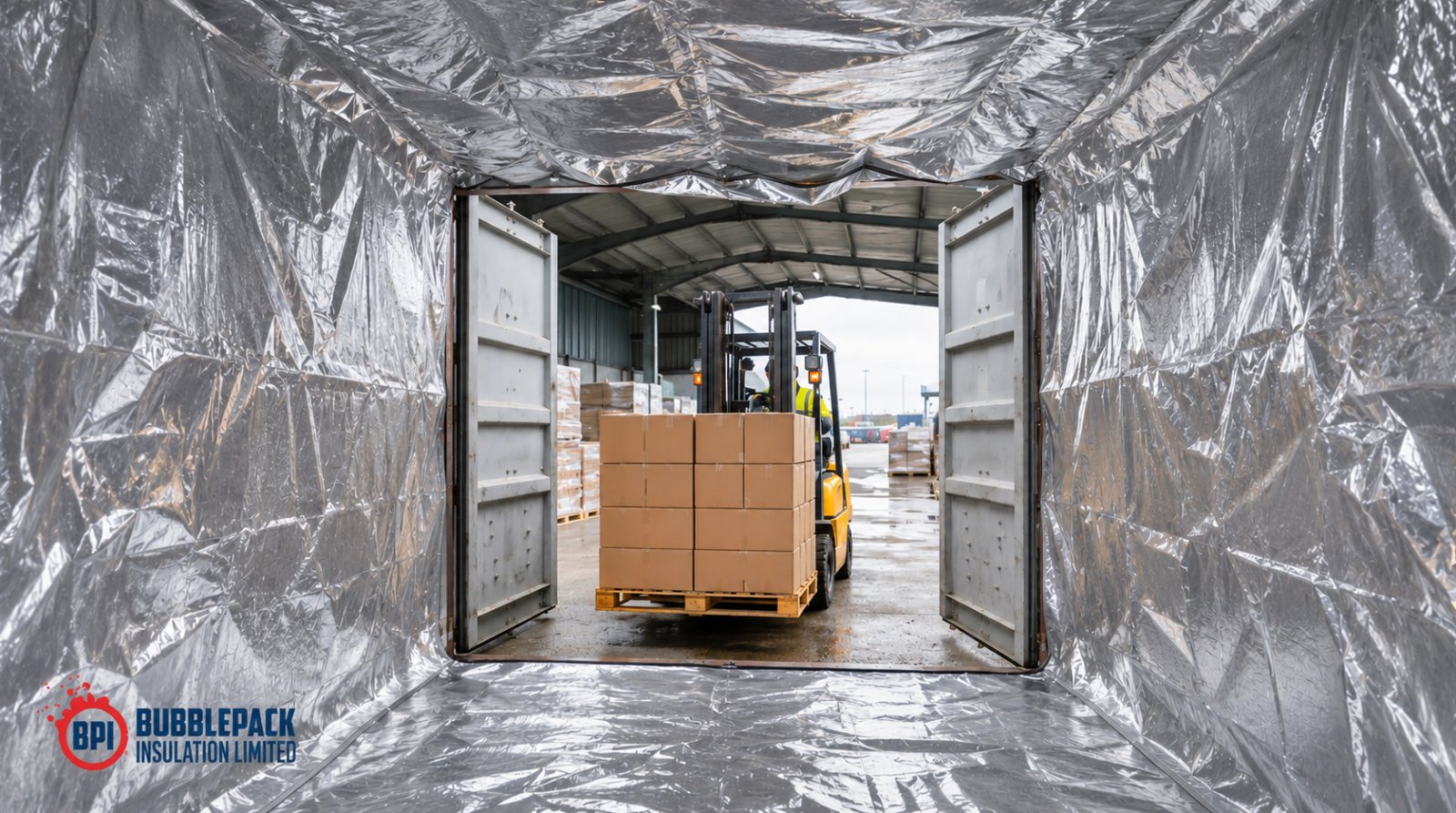
A thermal container liner is a passive insulating barrier fitted inside a standard dry shipping container. It helps slow heat transfer between the container interior and external conditions, but does not actively heat or cool cargo. It may suit temperature-sensitive exports when the cargo’s requirements and transport plan are appropriate for passive insulation.
How much can a thermal liner save compared to a reefer container?
The cost depends on the shipment and the protection required. A quotation can account for the selected liner, container arrangements and any installation or logistics coordination. Compare the complete transport plan, including whether active temperature control is needed. A passive liner is not a like-for-like option when cargo requires a controlled temperature setpoint.
Which industries use BubblePack thermal liners?
BubblePack thermal liners protect temperature-sensitive cargo in sectors including pharmaceuticals, food and beverage, dairy and chemicals. For example, an exporter shipping dairy products should assess the product’s documented temperature conditions alongside the route and handling plan. Pharmaceutical shipments also require documented product requirements and appropriate shipper qualification; a liner alone does not establish compliance.
Is BubblePack insulation tested and proven?
BubblePack states that its thermal liner systems are backed by EUROLAB testing and have been used in thousands of container shipments over more than 35 years. Testing and shipment history don’t determine suitability for every consignment. For pharmaceutical cargo, use documented product conditions and appropriate shipper qualification as part of the transport assessment.
What U.S. regulations and industry standards apply to temperature-sensitive freight?
For U.S. food transport, the FDA Food Safety Modernization Act includes a Sanitary Transportation rule aimed at preventing temperature abuse. IATA’s Temperature Control Regulations collect airline requirements and carrier variations for temperature-sensitive healthcare shipments.
How much do thermal cargo blankets, insulated liners, and temperature-controlled containers cost?
No prices are given for thermal cargo covers or insulated liners.