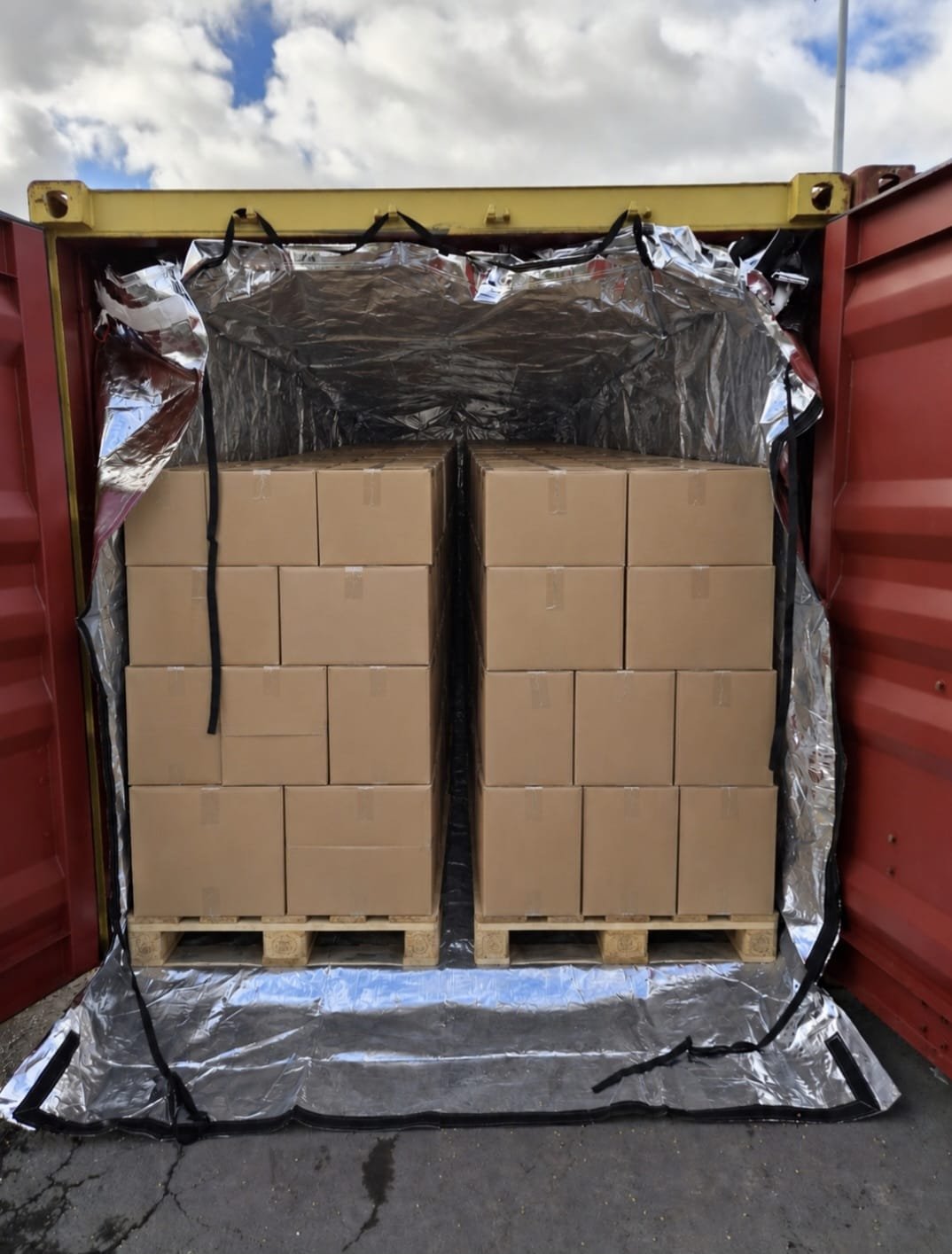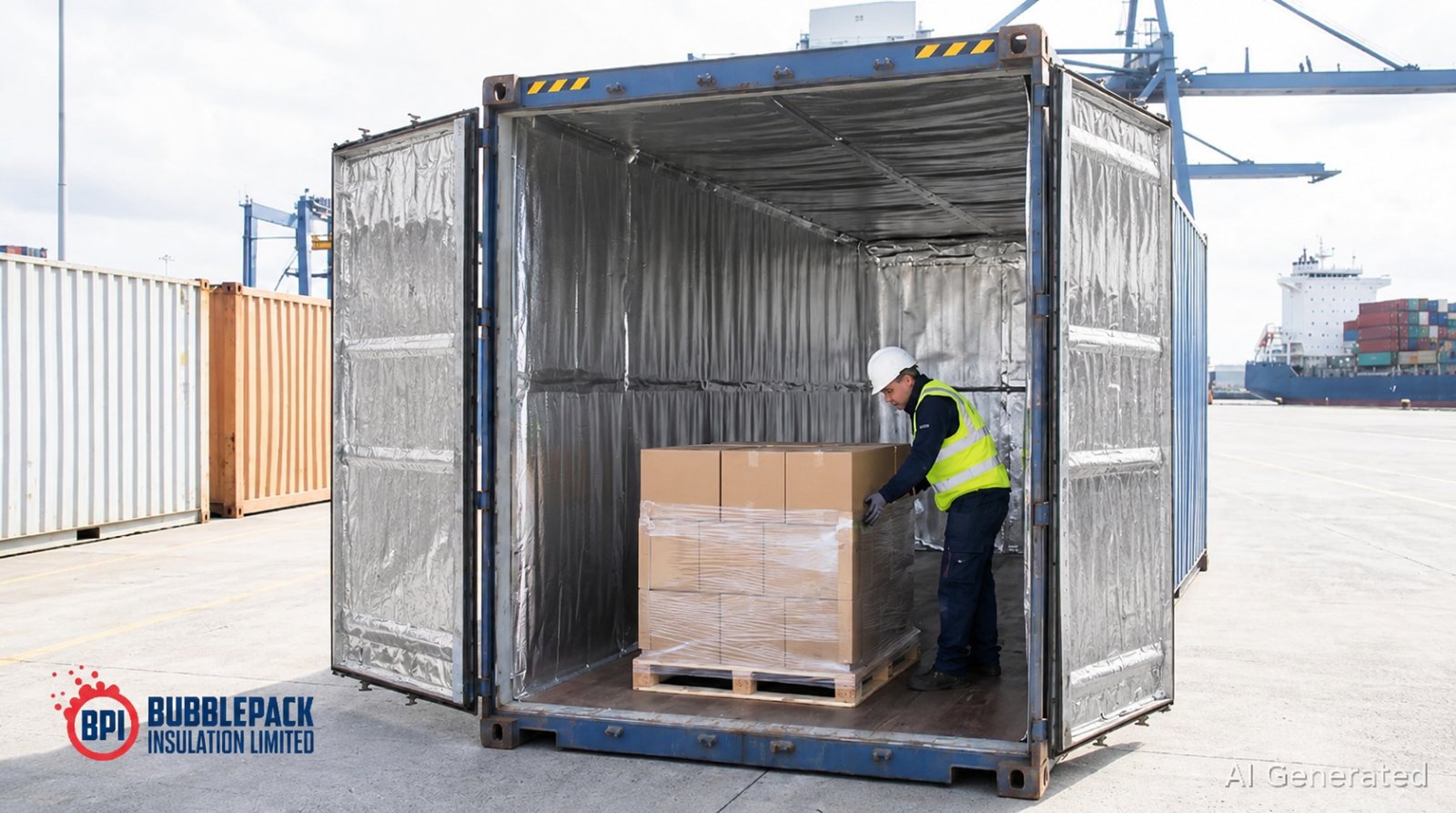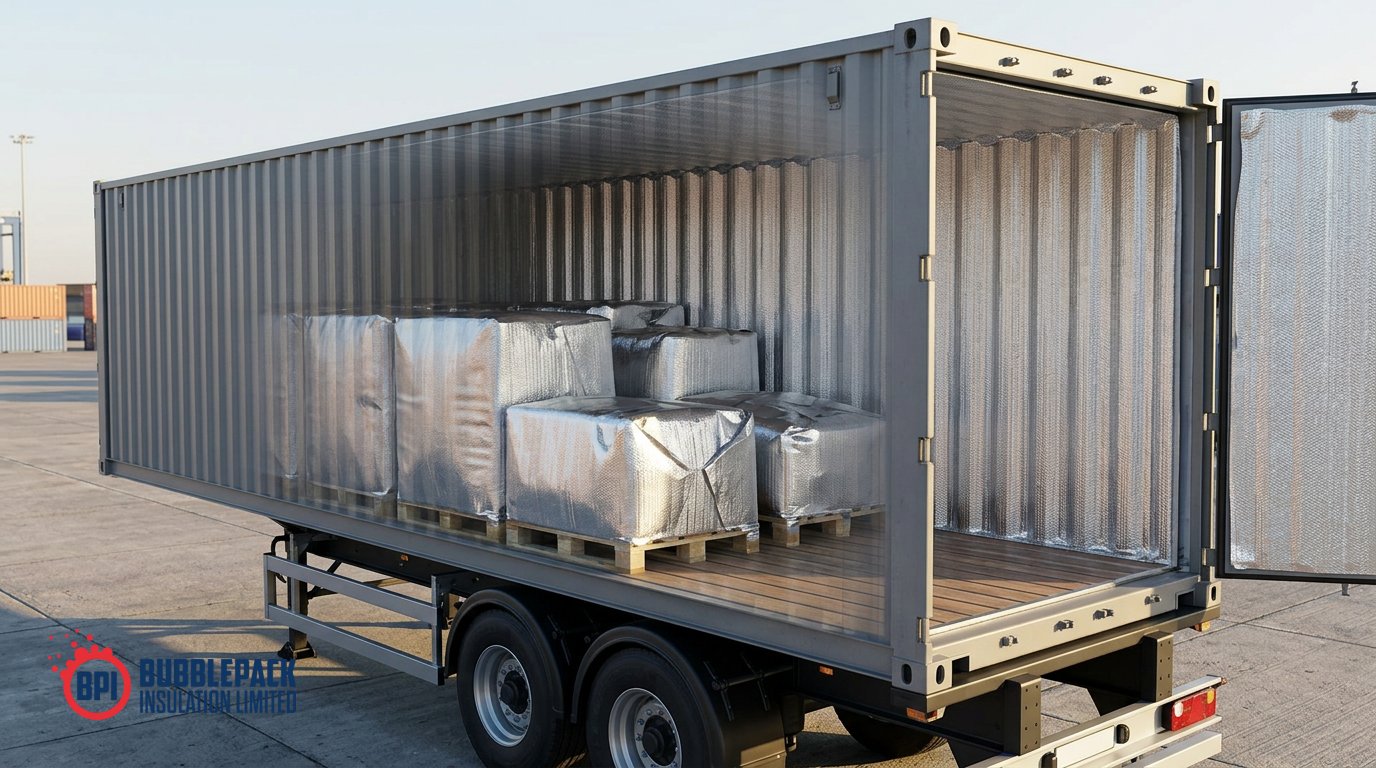
A thermal cover can slow heat transfer, but it cannot actively control cargo temperature. To reduce thermal shock in cargo transit, consider the full journey: loading conditions, port exposure, route, season and time in transit all affect how cargo responds to temperature changes. Thermal shock generally refers to a rapid temperature change that may stress temperature-sensitive goods or packaging. A temperature excursion is different: it occurs when conditions move outside a product’s documented limits. The significance of either depends on the product and the exposure.
Reliable protection starts with matching the method to the cargo’s documented requirements. This article explains how to identify temperature risks, select insulation materials for transport conditions and assess the role of thermal liners in export freight, including pharmaceutical shipments. Pharmaceutical shipments need documented, product-specific temperature requirements and appropriate shipper qualification. You’ll also learn where passive thermal liners can support cargo protection, and why suitability depends on the shipment rather than a general temperature claim.
Key Takeaways
• Assess a temperature excursion against the cargo’s documented requirements, the conditions experienced and the duration of exposure.
• Match insulation materials to the cargo, loading conditions, route, season and transit duration.
• For pharmaceutical shipments, use product-specific temperature requirements and appropriate shipper qualification when assessing thermal-cover suitability.
• Consider passive thermal liners as part of cargo protection, not as a replacement for active temperature control or shipment monitoring.
1. What Is a Temperature Excursion?
A temperature excursion occurs when cargo moves outside its documented temperature requirements. Its significance depends on the product, how far conditions departed from requirements and how long exposure lasted. A brief change in surrounding air does not automatically mean the product experienced the same change. Product stability information helps interpret the event and its potential effect, and whether passive protection from a thermal liner may be suitable.
Requirements depend on the cargo and destination, not on one universal shipping standard. For medicines moving through EU distribution, EU GDP guidance emphasises documented transport processes, product requirements, risk assessment and appropriate qualification by the responsible pharmaceutical business. Any liner assessment should use the medicine’s documented conditions and account for the shipper’s qualification.
A thermal liner provides passive protection, so assess whether it aligns with the cargo’s documented requirements and the journey conditions. Consider the product, loading conditions, route, season and transit duration. Choose a suitably powered refrigerated container when the cargo requires active temperature control throughout transit. Before deciding, confirm that the selected liner configuration and its coverage suit the shipment.
For a liner assessment, consider the cargo’s position and the overall load configuration, as these form part of the loading conditions. Assess the planned route and likely exposure to external conditions, including during transfers. These factors help determine whether passive protection is appropriate for the specific shipment; they do not establish a fixed temperature outcome.
Shipment records, including data logger or sensor readings where available, can support review of conditions. Air measurements may differ from product temperatures, so interpret readings against product-specific stability information. If an excursion is suspected, preserve relevant records and assess the cargo against its documented requirements before deciding its disposition.
Rapid temperature changes or excursions may affect sensitive products and can lead to quality investigations, rejected goods, rework or delivery disruption, depending on the product and circumstances. Risk depends on the product’s sensitivity and its exposure, not simply on whether an alarm sounds. A thermal liner may provide passive cargo protection, but cannot guarantee that an excursion will not occur.
2. Material selection for transport conditions
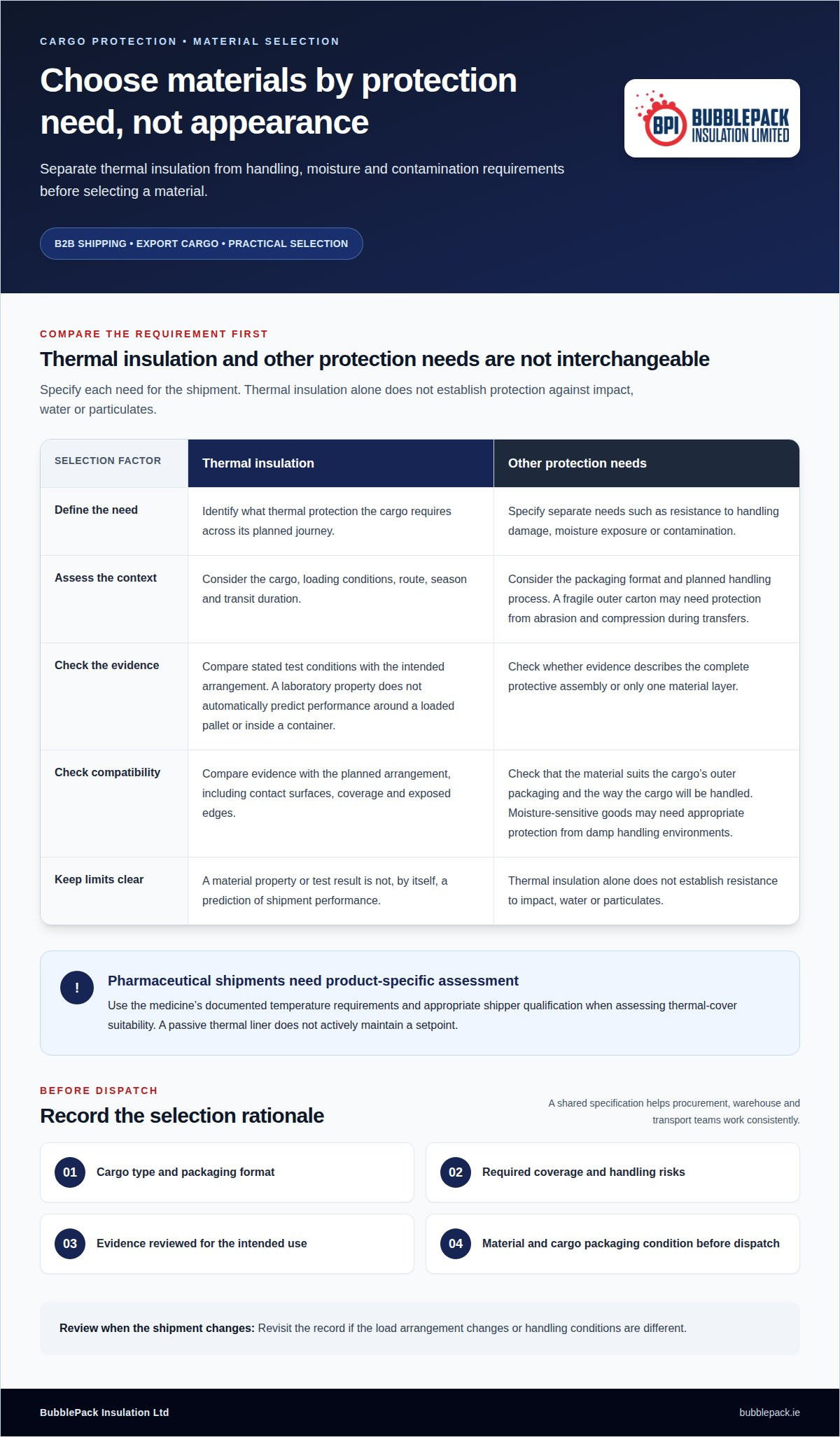
Start by defining what the material must protect against, rather than choosing by appearance or a single performance claim. For example, a palletised load of packaged food ingredients may need a different protective configuration from boxed industrial components. Distinguish thermal protection from other needs, such as resistance to handling damage, moisture exposure or contamination, and specify each requirement for the shipment.
Then examine evidence for the material in its intended use. A laboratory property describes a material under stated test conditions; it does not automatically predict performance around a loaded pallet or inside a container. Compare those test conditions with the planned arrangement, including contact surfaces, coverage and exposed edges. Check whether the evidence reflects the complete protective assembly or just one material layer.
Assess physical compatibility before selecting a format. Check that the material suits the cargo’s outer packaging and planned handling process. For example, a fragile outer carton may need protection from abrasion and compression during transfers, while moisture-sensitive goods need appropriate protection from damp handling environments. Keep these requirements distinct: thermal insulation alone does not establish resistance to impact, water or particulates.
Finally, document the selection rationale so procurement, warehouse and transport teams work to the same specification. Record the cargo type, packaging format, required coverage, handling risks and evidence reviewed. Before dispatch, inspect the chosen material and cargo packaging for damage, contamination or incomplete coverage. Review the record if a shipment changes from palletised freight to a different load arrangement, or if handling conditions change. This provides a practical basis for consistent decisions without treating one material as suitable for every cargo or route.
3. Thermal cover performance in pharmaceutical cold-chain transport
When assessing an Integrated Liner for a pharmaceutical shipment, start with the medicine’s documented transport requirements. The liner provides passive protection; it cannot actively maintain a setpoint or establish that a shipment remains suitable for use. Consider its potential contribution in the context of the payload, starting conditions, liner configuration and expected transit conditions.
The European Commission’s EU Guidelines on Good Distribution Practice address documented processes, product requirements, risk assessment and appropriate qualification by the responsible pharmaceutical business. Assess the Integrated Liner as part of the proposed transport arrangement, not as evidence of compliance. Qualification should consider whether available evidence applies to the product-specific conditions, route, loading arrangement, seasonal conditions and expected transit duration.
Review performance evidence against the Integrated Liner configuration being considered. Results from one payload or test arrangement do not automatically predict another shipment’s outcome. Load size, packaging, contact with surrounding surfaces and coverage can affect heat transfer, so evidence should reflect the arrangement under assessment.
Define the purpose and placement of monitoring devices in advance, and document how readings and alerts will be assessed. A sensor measuring air does not necessarily show the medicine’s temperature directly. Interpret its record alongside product data and the shipment’s handling history.
Retain the rationale for selecting the Integrated Liner and the associated monitoring and handling controls. If the route or packaging changes, reassess whether the existing evidence still applies. If an excursion is suspected, preserve records and follow the responsible pharmaceutical business’s quality process. The liner does not eliminate excursions or replace active temperature control when required.
4. How can insulated packaging and thermal liners reduce temperature swings?
Insulated packaging and container liners slow heat transfer between cargo and changing conditions outside the load. Insulating layers and reflective surfaces can slow different forms of heat transfer. Their effectiveness depends on material construction and installation, including coverage, exposed edges and thermal bridges. A reflective material's stated properties do not establish the temperature profile of a loaded container. Passive insulation moderates temperature change; it does not actively cool, heat or hold a setpoint.
Coverage matters. A pallet cover surrounds a particular unit load, while a container liner provides a barrier within the container. For a palletised shipment, protection beneath and around the freight can reduce exposed surfaces. Container coverage depends on the selected liner configuration, including whether it has floor protection. Match the arrangement to the cargo, loading conditions and route rather than assuming a cover protects every surface.
The BubblePack Insulation Ltd BPI Integrated Liner uses a five-layer laminate with 95-97% radiant heat reflectivity. Those figures describe the material’s radiant heat reflectivity, not a guaranteed temperature outcome inside a loaded container. Actual shipment performance depends on the payload, ambient conditions, starting temperature, configuration and transit duration. A passive liner also doesn't replace a suitably powered refrigerated container where active temperature control is required.
For ocean freight, consider solar exposure during port dwell and temperature variations along the route. Keep the cargo’s documented requirements central when assessing whether a liner is suitable. A liner configuration also affects how the cargo space is covered, so account for floor protection when specifying the arrangement. Pair the protection strategy with appropriate shipment monitoring and handling controls.
For suitable cargo and routes, thermal container liners can help moderate heat transfer and the rate of cargo temperature change during transit. Discuss your cargo protection requirements with BubblePack Insulation Ltd to identify an appropriate liner configuration for the shipment.
BubblePack Insulation: Pallet & Cargo Protection
BubblePack Insulation’s Pallet & Cargo Protection supports exporters assessing passive protection for temperature-sensitive freight. When cargo requirements and transit conditions make a thermal liner suitable, the BPI Integrated Liner is available internationally, while the BPI Roll Liner is professionally supplied and installed across Ireland.
Both options provide passive insulation, not active temperature control. Suitability depends on the cargo’s documented requirements, loading conditions, route, season and transit duration. Container coverage also depends on the selected liner configuration, including whether floor protection is included. For pharmaceutical shipments, documented product-specific temperature requirements and appropriate shipper qualification remain essential.
Share your cargo type, documented temperature requirements, route and container configuration with BubblePack Insulation to discuss suitable cargo protection.
Build a more consistent transit plan
A practical next step is to turn each shipment’s protection choices into a repeatable operational record. Capture the cargo requirements, selected protection, loading configuration and monitoring approach alongside the route plan. This gives logistics teams a clear reference for future movements and helps identify recurring exposure points that need attention.
Use that record to refine decisions as routes, seasons and handling arrangements change. The aim is not to rely on one material or measure in every situation, but to align protection with the specific shipment. A considered process can help your team manage the risk of rapid temperature changes during transit while maintaining clear accountability across handovers.
If you’re planning thermal protection for export cargo, contact BubblePack Insulation to discuss the shipment requirements. A well-defined plan gives your team a stronger basis for the journey ahead.
Frequently Asked Questions
How Can Shippers Assess Liner Suitability?
Assess a thermal container liner against the cargo’s documented temperature requirements, loading conditions, route, season and transit duration. Confirm these details before arranging supply and installation, and share relevant requirements with the teams responsible for the shipment. A liner provides passive insulation; it does not actively control the cargo’s temperature.
What Cargo Conditions Should Be Considered?
Consider the cargo’s specified conditions alongside the planned loading and journey. A container waiting in direct sun, doors left open during transfer, or cargo entering transit before reaching its specified shipping condition may affect the shipment’s thermal environment. A thermal liner can provide passive insulation, but it does not actively heat or cool cargo.
What Role Does a Thermal Liner Play?
A thermal container liner provides passive insulation during transport. Its suitability depends on the product’s documented requirements and the conditions of the shipment, including the route and transit duration. A liner does not determine product quality or guarantee that specified conditions will be maintained, so assess it as part of the shipment plan.
How Does a Thermal Liner Relate to Cargo Exposure?
A thermal liner provides a layer of passive insulation between the container interior and the cargo, according to the liner configuration selected. Container coverage can vary, including whether floor protection is included. Consider the cargo’s loading conditions and requirements when assessing whether the selected configuration is suitable.
Can a Thermal Liner Prevent Temperature Excursions?
No. A thermal liner provides passive insulation and does not actively control temperature or guarantee that cargo will remain within its specified conditions. Assess suitability against the cargo’s documented requirements, loading conditions, route, season and transit duration. Use appropriate shipment monitoring and handling processes alongside the liner.
Which Cargo Types May Be Suitable for Thermal Liners?
Suitability depends on each cargo’s documented temperature requirements and the conditions of its shipment. Food ingredients, dairy, beverages and suitable chemicals may be assessed against their own requirements. Pharmaceutical shipments require documented product-specific temperature requirements and appropriate shipper qualification. Do not assume that all goods in one sector are suitable.