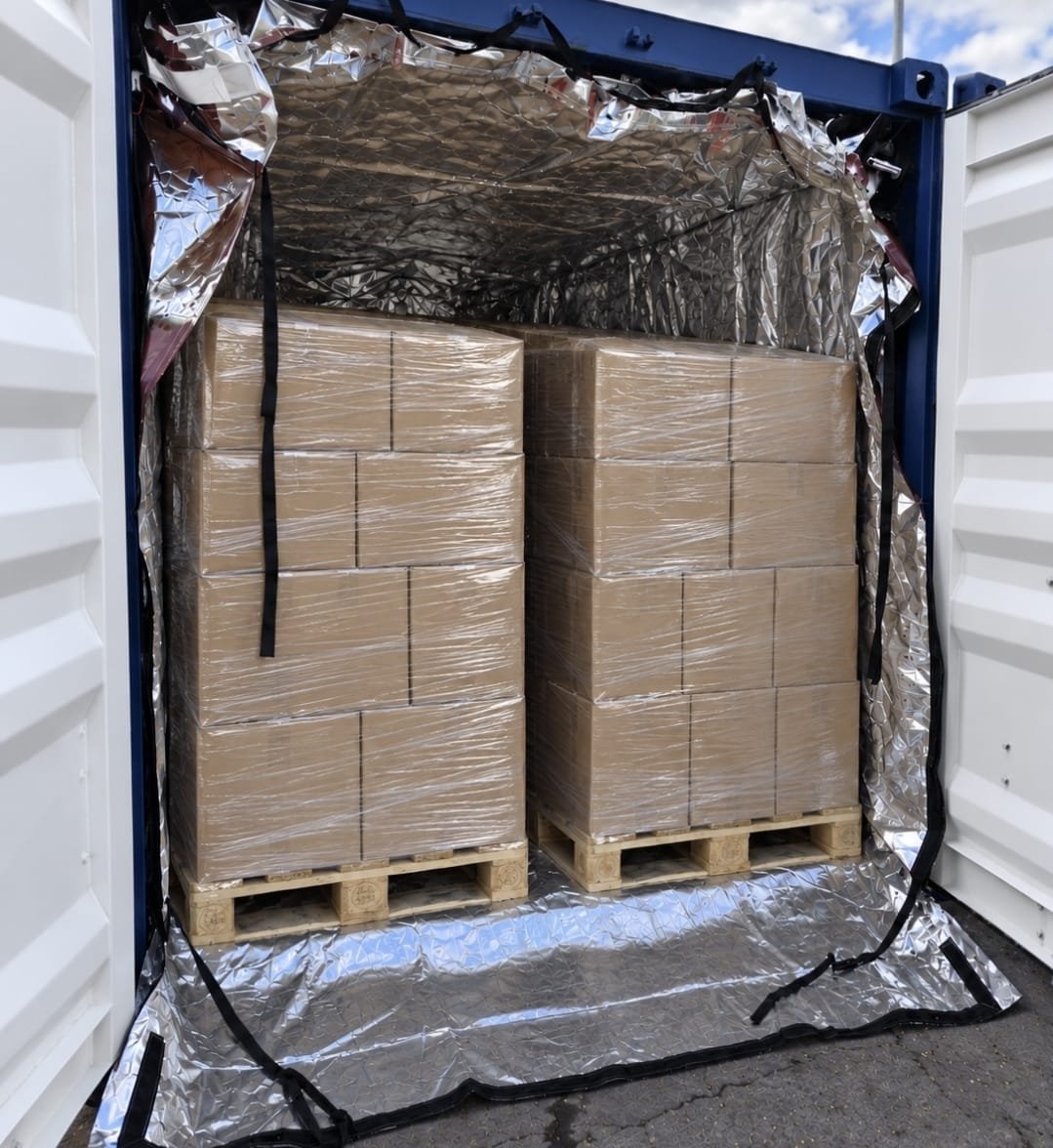
Heat exposure during shipment can affect dairy powder’s quality over time, even while the product remains dry. Effective thermal protection for dairy powder helps limit temperature swings, but it does not actively maintain a set temperature.
Exporters need to consider more than the powder’s condition at loading. Storage temperature, packaging and time all influence quality, so shelf-life claims should be read in light of storage history. This matters on long routes, where cargo may encounter changing conditions between dispatch and arrival.
This article explains how warmer and cooler conditions can affect dried milk during storage, which environmental factors matter alongside temperature, and how passive thermal protection can support export planning. It also clarifies where container insulation liners fit, and why suitability depends on the powder’s requirements, loading conditions, route and expected transit duration. The aim is to help assess thermal risk before a shipment moves, without confusing insulation with active temperature control or assuming one storage condition suits every dairy powder.
Key Takeaways
• Assess shelf life in the context of storage temperature and packaging, rather than treating it as a fixed period.
• Use the shipped powder's documented temperature and moisture requirements, not generic numerical thresholds.
• Account for moisture as well as heat: packaging that provides a moisture barrier helps limit caking and quality deterioration.
• Consider passive container insulation when route, season and transit duration create temperature exposure; liners do not actively control temperature.
Dried milk quality during long-term storage
Drying removes water, but it does not make milk powder immune to quality changes. Storage temperature, exposure to moisture and oxygen, and time all influence how the product performs.
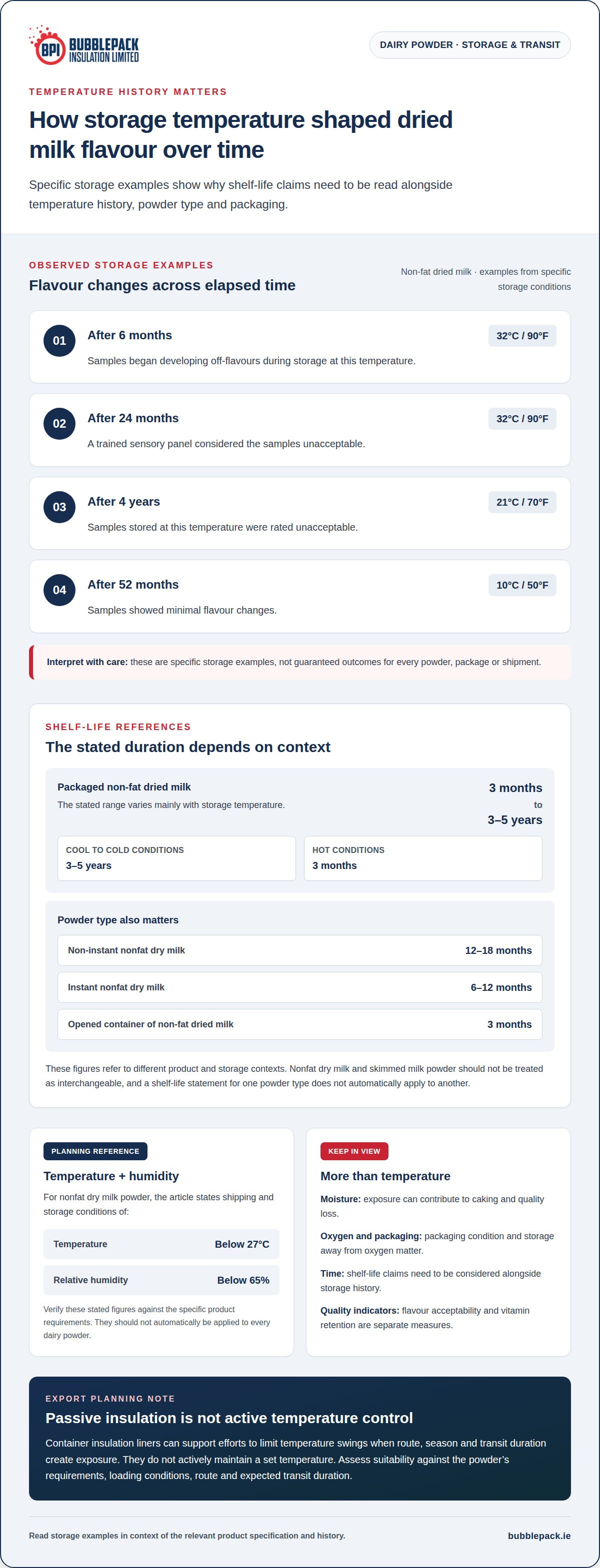
For exporters, shelf-life figures are useful only when considered alongside storage conditions and powder type. The examples below show how processing category and storage history shape quality over time.
Thermal stress and powder quality
Thermal stress is the cumulative effect of heat exposure on powder quality during processing and storage. Prolonged warmth can change flavour and shorten the period in which dried milk remains acceptable.
Processing classifications such as low-heat, medium-heat and high-heat milk powder describe manufacturing characteristics, not the temperatures experienced during later storage or transport. Exporters should use the product's actual specification to assess shipment requirements.
Storage and transport requirements
Storage and transport requirements are the conditions needed to protect a particular powder’s quality throughout its supply chain. Product type matters: nonfat dry milk and skimmed milk powder are distinct categories, even though both are made by removing water from pasteurised skim milk.
These categories should not be treated as interchangeable when assessing shipment quality. A shelf-life statement for instant nonfat dry milk, for example, does not automatically apply to non-instant powder. Exporters should match the product identity and specification to the cargo records, so storage history is assessed against the correct powder rather than a broad dairy category.
Temperature and humidity effects
Temperature and humidity affect powder through different exposure pathways. Heat is associated with faster flavour deterioration, while moisture reaching the product can contribute to caking and quality loss.
Milk powder shelf life varies with formulation, packaging, storage temperature, humidity and oxygen exposure. Warmer storage can accelerate some quality changes, but a universal shelf-life range is not appropriate for all dairy powders. Refer to the manufacturer's validated shelf-life and storage specifications.
How temperature changes flavour over time
Elevated storage temperatures can accelerate flavour changes in some dried milk products. The timing and significance depend on the powder's composition, packaging and storage history; results from individual studies should not be applied to all export shipments without appropriate context.
Cooler storage may slow some quality changes compared with warmer storage, but neither a single test temperature nor a fixed duration predicts every product's shelf life. Use product-specific stability evidence and documented handling conditions.
Powder type and stated shelf life
Instant and non-instant powders may have different specifications and shelf-life claims. Do not assume one category's stated shelf life applies to another; confirm the manufacturer's product and packaging requirements.
Powder type, packaging and storage temperature all affect how a stated shelf life applies. Read the product specification alongside its storage history, especially when a long export route involves extended periods in transit or storage.
Packaging and opened product
Opening a package can compromise its original moisture and oxygen barrier. Any remaining shelf life and handling instructions should follow the manufacturer's guidance, rather than a universal period after opening.
Non-fat dried milk should also be stored away from oxygen. Once packaging is opened, it no longer has the same sealed condition. For export stock, retaining intact packaging and lot identification helps distinguish the product’s original storage period from later handling after opening.
Reading quality indicators in context
Processing classifications and whey protein characteristics can help distinguish powder types, but they do not measure the cargo's later temperature exposure or remaining shelf life. Review the relevant quality indicators against the product specification and storage history.
Flavour, nutritional characteristics and other quality measures may respond differently to storage conditions. Do not infer a universal vitamin-retention period from an unspecified study. Assess each attribute using the manufacturer's specification and relevant evidence.
What temperatures and humidity levels cause dairy powder to degrade?
There is no single temperature and relative-humidity limit that can be applied to every dairy powder shipment. Exporters should use the manufacturer's documented storage and transport requirements. Temperature and moisture create different risks: heat may accelerate quality changes, while moisture ingress can contribute to caking.
Use product-specific limits for planning
Assess temperature and humidity separately against the shipped product's documented requirements. Conditions can change during loading, port handling and ocean transit, so a single reading at dispatch or arrival may not represent the full journey.
Whole milk powder, skimmed milk powder and other dairy ingredients can have distinct characteristics and handling requirements. Base decisions on the exact shipped product's documented specification.
Why relative humidity matters
Relative humidity describes moisture in the surrounding air, not the powder's own moisture content. If moisture reaches dairy powder, caking can affect handling and quality. Packaging integrity and the duration of exposure matter alongside ambient readings.
Packaging condition is part of the assessment. A moisture barrier helps protect the powder, but its performance depends on the package remaining intact. Damaged packaging can expose the product to the surrounding environment during storage or handling. Consider humidity figures alongside packaging condition and exposure duration.
Consider exposure across the route
Export transport involves more than the sea passage. Conditions may vary while awaiting container collection, during loading, at ports and after discharge. Assess these stages against the product's documented limits and packaging requirements rather than a generic temperature or humidity threshold.
A container loaded in a controlled warehouse may later wait in an exposed port environment. The warehouse record alone does not describe that later exposure, and an arrival reading cannot show every condition experienced earlier. Route planning should account for the full journey, including storage intervals and cargo handling points.
Separate temperature from humidity control
Temperature and humidity are related environmental measures, but they are not interchangeable. A temperature reading cannot establish relative humidity, and a humidity reading cannot show whether the powder experienced heat. Where shipment monitoring is part of the cargo plan, record both conditions and interpret each against the relevant product requirements.
This distinction helps identify the likely source of a quality concern. A shipment within the stated humidity condition may still have experienced temperatures above its planning limit. Conversely, suitable temperature readings do not establish that moisture exposure was controlled. Treating the measures separately gives quality teams a clearer basis for reviewing cargo history.
Apply product requirements to export decisions
Use the product specification, packaging format and route conditions together when assessing dairy powder for export. The stated limits provide a reference for nonfat dry milk powder, not a universal target for all milk powders. Product type, loading conditions and expected transit period all matter.
Before dispatch, align the cargo plan with the powder's documented requirements and expected storage and transport conditions. Retain available temperature and humidity records separately, and interpret them against the relevant product specification rather than assuming universal limits.
BubblePack Insulation: Container Liner Options
BubblePack Insulation's container liner solutions can support exporters assessing exposure during containerised dairy powder shipments. Thermal liners provide passive insulation, helping moderate heat transfer rather than actively controlling temperature. Suitability depends on the powder’s requirements, loading conditions, route, season and transit duration.
The BPI ROLL LINER is professionally supplied and installed across Ireland. The BPI INTEGRATED LINER is supplied internationally, with installation arrangements available for export operations. Container coverage depends on the selected liner configuration, including whether floor protection is included. Neither liner replaces product-specific storage requirements or active temperature control where the cargo needs it.
To discuss suitable cargo protection for an upcoming shipment, contact BubblePack Insulation.
Plan protection around the shipment
Before the next export booking, turn the product specification into a shipment acceptance plan. Define the conditions that require an operational review, who is responsible for that review, and which team has authority to release the cargo. Clear decision-making prevents uncertainty at handover, particularly when several organisations manage the same consignment.
At the planning stage, align procurement, quality and logistics on the protection approach and its limits. Record the selected configuration, loading assumptions and route-specific considerations in the shipment file. This gives later reviews a consistent reference, supports planning for comparable consignments and makes changes visible when the route or handling arrangement changes.
For thermal protection for dairy powder, operational readiness means turning product requirements into decisions teams can apply consistently. A concise, agreed plan gives each shipment a clear starting point and keeps cargo protection within export planning, rather than leaving it as a last-minute adjustment.
Frequently Asked Questions
What is thermal protection for dairy powder?
Thermal protection for dairy powder is the planned management of heat exposure from dispatch through delivery. It brings together suitable cargo protection, shipment conditions and product-specific quality requirements. A logistics team can, for example, include the powder’s specification and packaging format in its cargo brief, then assess whether the planned container arrangement suits the route and handling pattern.
How should milk powder be stored to protect it from heat?
Use the product’s storage specification to guide warehouse placement and stock handling. Keep lot identification visible, record storage conditions in the relevant inventory records, and link each lot clearly to its dispatch documentation. When stock moves between warehouse zones, for example, updating its location and handling history helps the export team understand its route before loading.
What packaging materials provide the best heat and moisture barrier for dairy powder?
No single packaging material is best for every powder and shipment. Choose packaging to match the product specification, required barrier performance, package format and sealing method. During procurement, compare documented packaging performance with cargo requirements. Also consider whether the pack can be handled and palletised without compromising its seals or traceability information.
How does heat affect dairy powder shelf life, flavour, colour and nutrition?
Heat exposure can affect quality attributes in different ways, so assess flavour, colour and nutrition separately against the product specification. A change in one attribute does not establish the condition of the others. A quality review can compare documented exposure history with acceptance criteria, then use appropriate product assessment rather than relying on appearance alone.
How can dairy powder be protected from heat during shipping and warehousing?
Build the protection plan around shipment handovers, not just the ocean leg. Define who records cargo conditions at warehouse release, container loading and port transfer, and keep those records with the lot documentation. If a container liner forms part of the plan, align its configuration with the cargo arrangement and route. This makes the protection approach clearer across teams.
What are the risks of heat damage and how can damaged dairy powder be identified?
Potential concerns include a mismatch with the product’s flavour, colour, texture or other acceptance criteria. Review package condition, lot records and available shipment-condition data together; no single observation establishes the cause or extent of a quality change. If a lot is in question, the responsible quality team can assess it against the relevant specification and determine its disposition.