Cold-weather cargo damage can begin before a shipment reaches its destination. To protect cargo from cold during shipping, start with the goods’ documented temperature requirements and the conditions they may encounter in transit.
Freezing can affect liquids, food ingredients, pharmaceuticals, electronics and packaging. The risk depends on the product, route, season, loading conditions and transit duration. Match protection to the cargo: passive insulation can reduce the effect of external temperature changes, but it does not actively heat cargo or maintain a fixed temperature.
This guide explains how cold affects different goods, which ocean-route conditions can increase exposure, and how thermal container liners can support export cargo protection. It also explains when a liner may suit an export shipment. For pharmaceutical cargo, begin with the product’s documented temperature requirements and appropriate shipper qualification.
Key Takeaways
• Match protection to the cargo’s documented temperature requirements, and keep clear records for the shipment.
• Assess the route, season and transit duration to identify where cold exposure may arise.
• Assess whether a thermal container liner is suitable for the cargo and route; use active temperature control where required.
• Compare BubblePack's prefabricated Integrated Liner and professionally installed Roll Liner against your export cargo, container and installation requirements.
1. Effects of freezing temperatures on liquids, electronics, and packaging
For temperature-sensitive food shipments, shippers, carriers and third-party logistics partners need to understand the applicable food-transport rules. Transport arrangements should account for the temperatures required for the goods being shipped.
Freezing can change a product’s physical condition, not just its temperature. Liquids expand as they freeze, putting pressure on closed containers and potentially causing damage. Other goods may also have product-specific handling requirements. These risks make the product’s own requirements more useful than a general instruction to keep freight warm.
Document the required transport temperature range in the shipment's handling instructions and share it with the carrier and logistics partners. Ensure the transport booking and associated documents communicate any special handling requirements using the carrier's agreed process. For sensitive freight, use a temperature-monitoring device and retain its readings with the shipment records. These records can help teams assess transit conditions and support later reviews of handling or quality concerns.
Choose the transport approach according to the cargo’s temperature needs and the journey. A suitably powered refrigerated container provides active temperature control; passive insulation can reduce the effect of external temperature changes but cannot heat cargo or maintain a set temperature. Expedited shipping may shorten transit, but it does not replace temperature control when the goods require it. Include possible delays, loading exposure and any selected pallet-level or container-level protection in the logistics plan, and ensure the carrier receives the relevant handling instructions.
2. Assessing thermal container liner suitability for products and routes
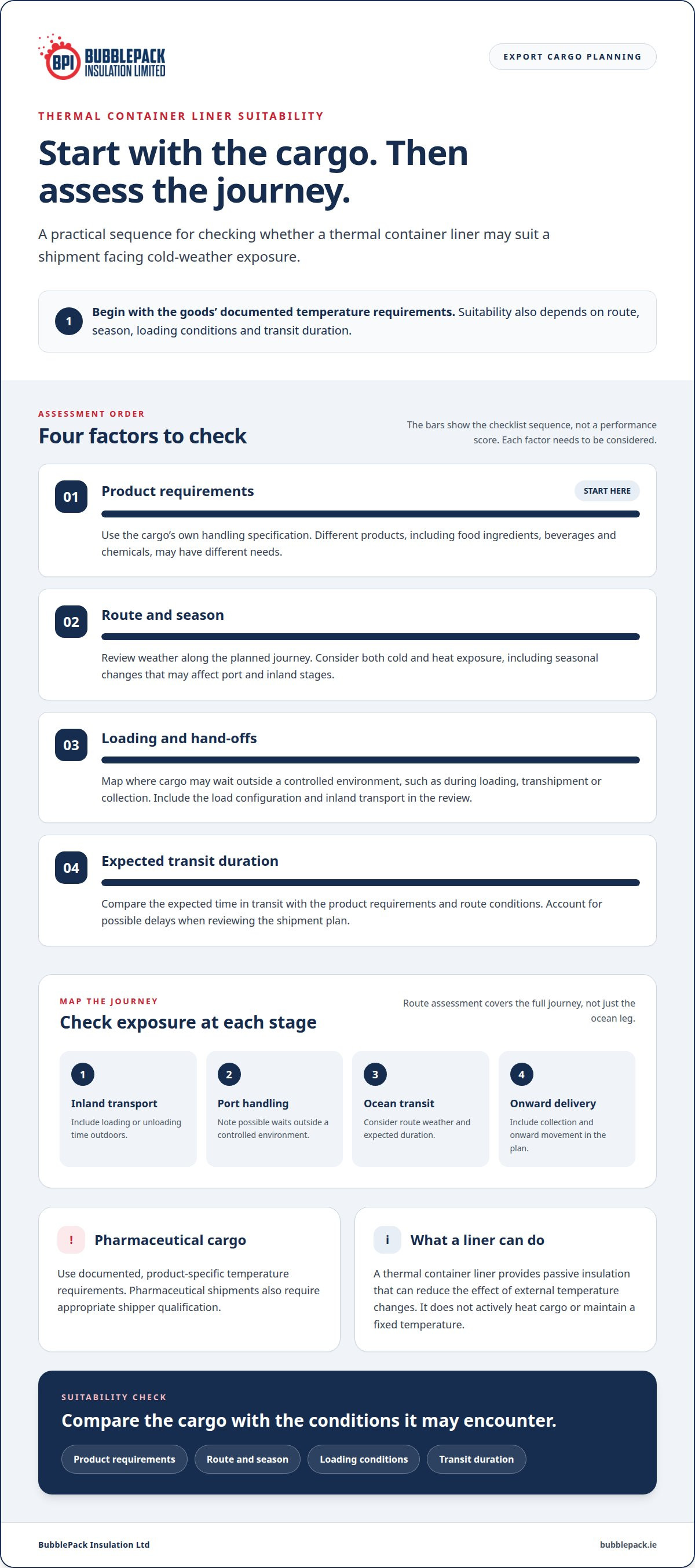
Begin with the cargo’s handling specification and identify products sensitive to cold. Dairy ingredients, beverages, pharmaceuticals and some chemicals may have different requirements, even within the same broad category. Assess whether a thermal container liner may be suitable by considering each product’s needs, the load configuration and expected transit time. Pharmaceutical shipments require documented product-specific temperature requirements and appropriate shipper qualification.
Map the full journey from origin to destination, including inland transport, port handling, ocean transit and onward delivery. Note each hand-off where cargo could wait outside a controlled environment, such as during loading, transhipment or collection. These points matter when assessing liner suitability because exposure depends on route, season, handling arrangements and transit duration, not simply the departure and arrival ports.
Review weather conditions along the planned route before dispatch. Consider both cold and heat exposure, since seasonal changes or delays can alter the conditions a shipment encounters. For example, an export load travelling through regions with different seasonal patterns may face contrasting conditions at port and inland stages. Include the trailer used for inland transit in the assessment, particularly if loading or unloading adds time outdoors.
To assess whether a thermal container liner may be suitable, compare the product requirements with route conditions and expected transit duration. Then identify hand-offs, likely weather exposure and any schedule changes that may affect the assessment. Consider loading conditions as part of the suitability review. Exporters can discuss thermal container liner suitability for their shipment as part of that planning process.
3. Insulated packaging and pallet covers
Pack each product according to its documented handling requirements, using suitable insulated packaging where appropriate. A pallet cover encloses a palletised load; a shipping container liner provides insulation at container level. They protect different parts of the shipment, so one is not a substitute for the other. Neither actively heats cargo or guarantees a set temperature.
To prepare cargo for winter shipping, group products with similar temperature requirements, use packaging suited to the goods, and minimise exposure during loading. Secure the load and record its specific handling requirements in the shipping instructions. For example, palletised food ingredients may use an insulated cover, while the wider container may need a separate insulation assessment.
Insulated packaging can use different materials and formats, including thermal wraps, covers and insulated boxes. The right choice depends on the product, packaging format, loading conditions and journey. A pallet cover may help protect palletised freight, but packaging needs should be assessed in the context of the full shipment. Check that the selected packaging works with the cargo’s existing packing and handling arrangements.
Do not select refrigerants or other cooling elements by default for cargo at risk of freezing. Their use must suit the product’s temperature requirements and transit duration; an unsuitable arrangement could expose goods to a different temperature risk. Where a shipment needs actively controlled temperature, refrigerated transport is distinct from insulated packaging. Communicate the cargo requirements and clear handling instructions through the carrier's agreed booking and shipping-documentation process. This helps align packaging, loading and transport with the shipment's documented needs.
4. Pallet covers and insulated cargo blankets
For palletised freight facing winter exposure, a cover or cargo blanket can provide a protective layer around the load. These options can help during handling and transit, but they do not actively heat cargo or guarantee a particular temperature. Select them according to the goods’ documented requirements, packaging and planned journey.
A pallet cover encloses a palletised load, while a cargo blanket is placed around or over freight as a protective layer. Neither is a container liner, which provides insulation at container level. For example, a pallet of electronics may need local protection around the goods, while a container liner addresses temperature changes affecting the broader cargo space.
Before dispatch, match the protection to the load’s shape and handling plan. Check that a cover or blanket will not obstruct cargo identification, access or safe handling. If a shipment includes mixed products, assess each group separately. A blanket suitable for packaged ingredients may not suit another product with different temperature requirements.
Consider where winter challenges may occur: during loading, a port wait or inland transfer with a logistics partner. Pallet-level insulation may help with exposure around handling points, but it does not replace active temperature control when the cargo requires it. The route, transit duration and loading conditions all influence the choice. Include the selected protection in handling instructions so the carrier understands how to manage the freight.
For commercial shipments where insulated pallet-level protection is being considered, discuss cargo protection options for the load and its transit conditions.
Insulated pallet covers and specialist cargo blankets vary in construction and performance. Select a suitable product using its actual material specification, coverage, handling requirements and evidence for the intended journey; do not assume that all covers provide the same thermal or moisture protection.
5. BubblePack Insulation: Container Liner Options
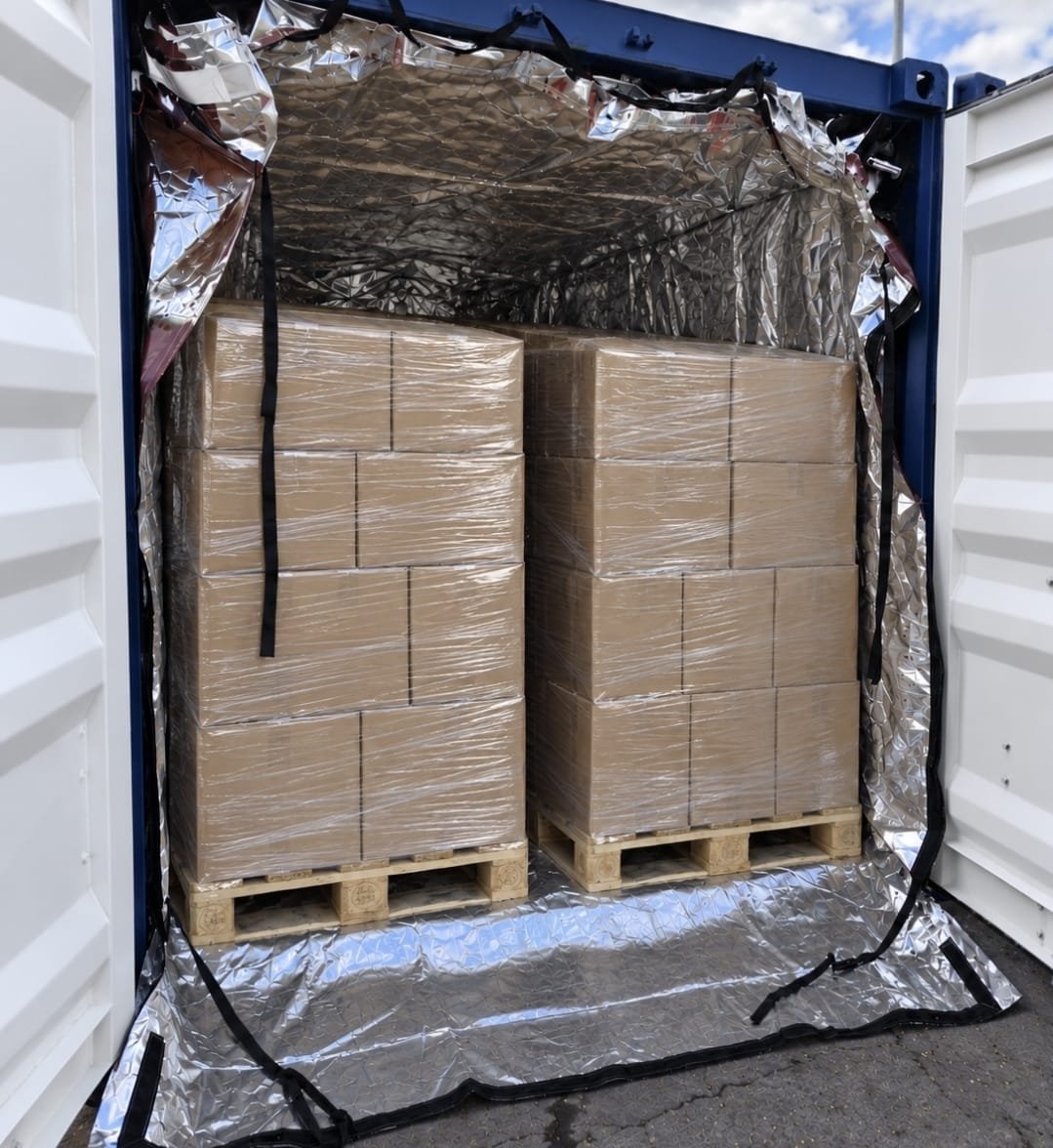
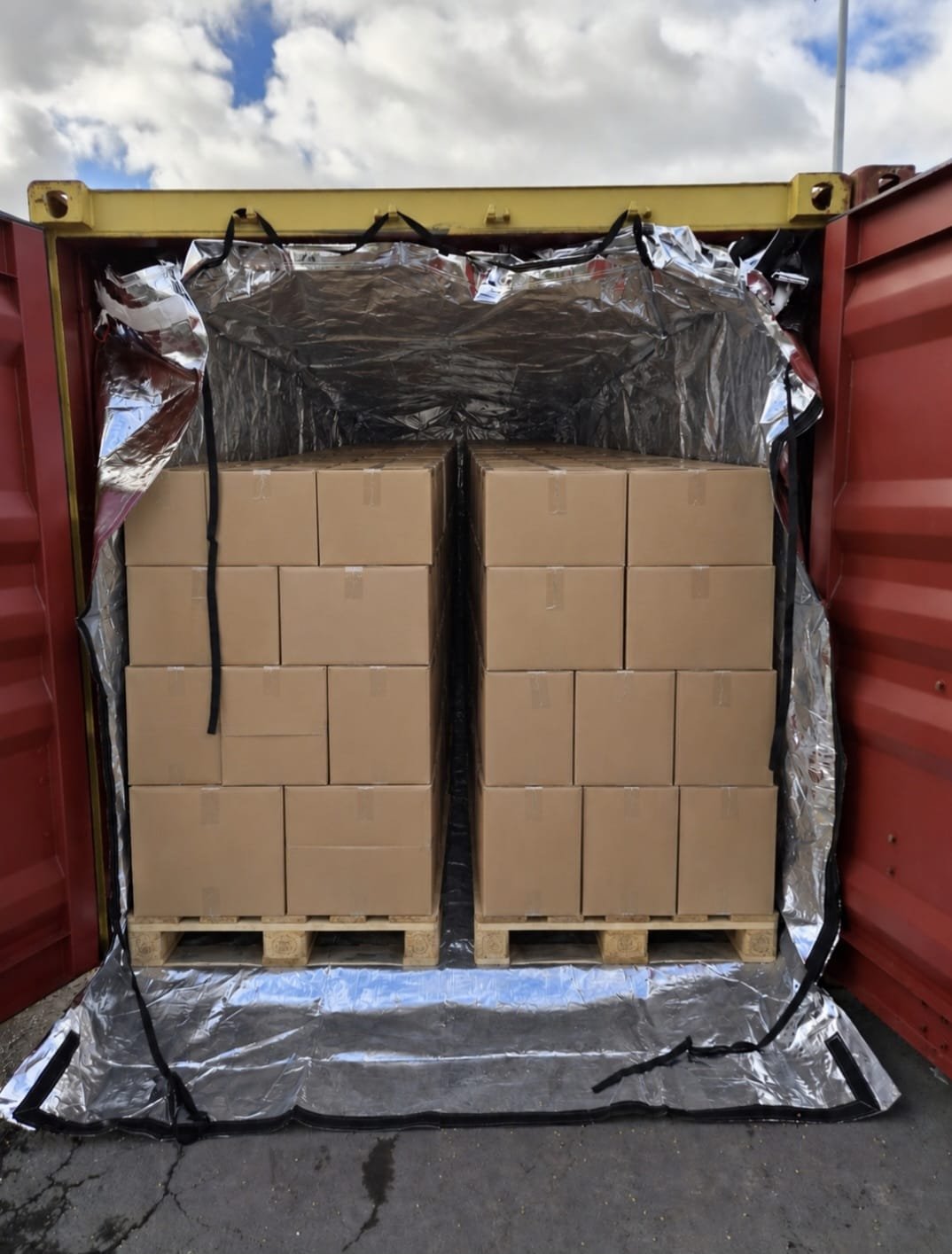
BubblePack Insulation helps exporters assess passive protection for temperature-sensitive ocean cargo when product requirements and route conditions make container insulation relevant. Its prefabricated BPI Integrated Liner is available internationally for installation by shippers or partners. It provides passive insulation, not active heating or temperature control, so suitability depends on the cargo’s documented requirements, loading conditions, route, season and transit duration.
The Integrated Liner uses a five-layer laminate with 95-97% radiant heat reflectivity. This describes the material’s radiant heat reflectivity, not a guaranteed temperature or outcome for an individual shipment. It is supplied for 20ft, 40ft HC and 45ft containers. Coverage depends on the configuration selected, including whether floor protection is included. Installation typically takes 7-20 minutes, depending on container size.
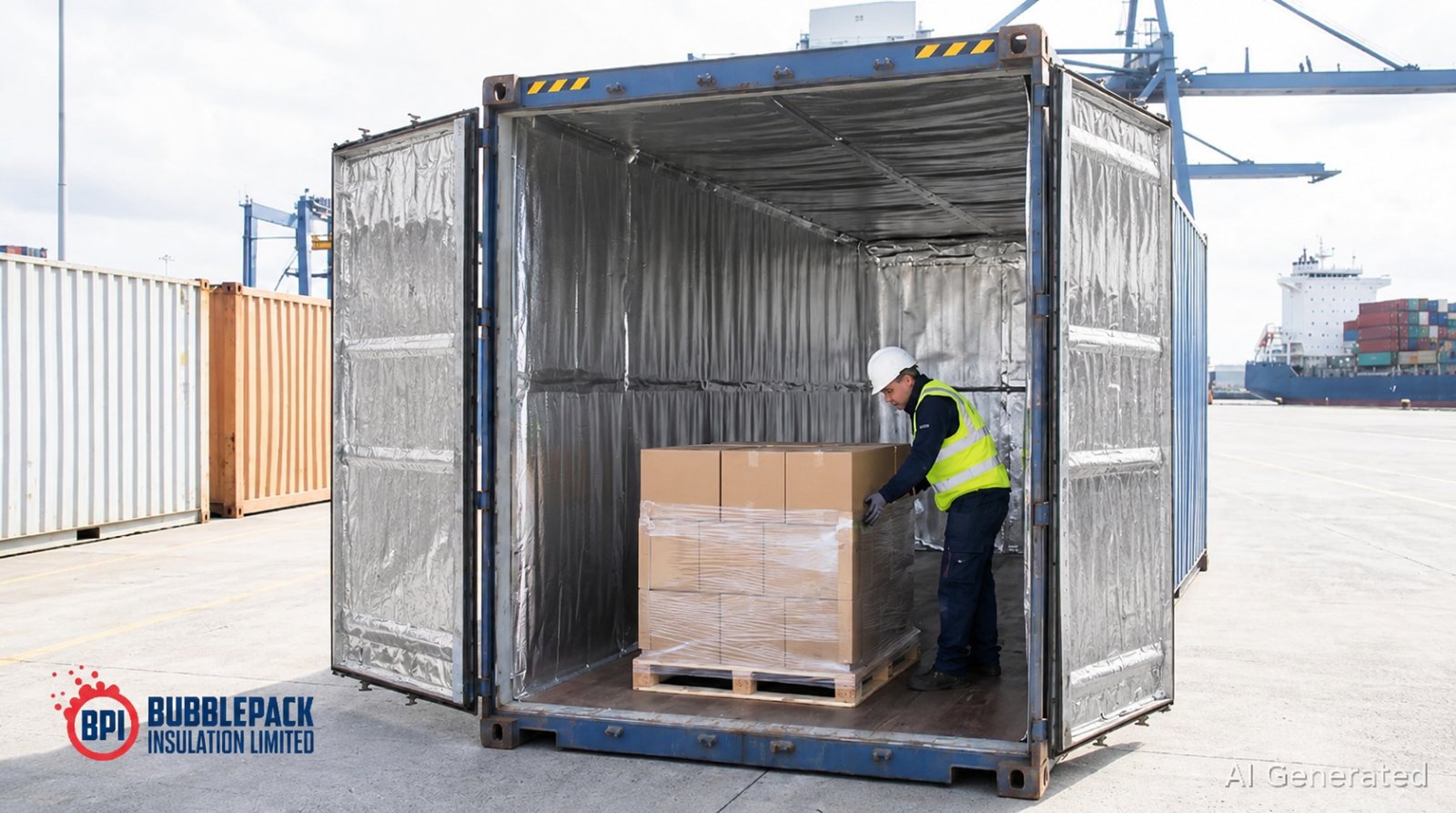
For Irish exports, the BPI Roll Liner is reflective bubble-foil insulation professionally supplied and installed by BubblePack’s technicians across Ireland. Its three-layer construction is typically installed in 20-45 minutes. Planning involves the container type, depot location, collection date, cargo requirements and fitting availability. This option serves a different installation context from the prefabricated Integrated Liner.
Choose between these systems according to the shipment's requirements, container configuration and installation arrangements. For pharmaceutical shipments, documented product-specific temperature requirements and appropriate shipper qualification remain essential; a liner alone does not establish GDP compliance. Share the cargo requirements and shipment details with BubblePack Insulation to discuss a suitable container liner.
Build cold-weather protection into your next shipment plan
For recurring export lanes, make cargo protection part of shipment planning rather than a last-minute response to a forecast. A consistent decision process helps procurement, logistics and quality teams align the chosen thermal container liner with the shipment’s documented needs before booking and loading.
Use the next shipment review to identify who owns each decision: product requirements, transport arrangements, loading instructions and temperature records. This gives your team a clearer basis for assessing whether a thermal container liner is suitable for the cargo and movement. Where active temperature control is required, include it in the transport plan.
BubblePack Insulation can discuss thermal container liners in the context of your export operation. Contact BubblePack Insulation Ltd to discuss the shipment you’re planning, and take the next step with a considered protection plan.
Frequently Asked Questions
What temperature range does my cargo need during shipping?
Use the product’s documented requirements, not a general range applied to an entire cargo category. Requirements can differ between formulations, ingredients and finished goods, even within pharmaceuticals or food products. For a mixed shipment, identify each product’s permitted conditions and plan loading accordingly. Pharmaceutical shipments need documented product-specific temperature requirements and appropriate shipper qualification before dispatch.
How do I choose a thermal container liner for my cargo?
Assess the cargo’s documented requirements, loading conditions, route, season and transit duration. Thermal container liners provide passive insulation and do not maintain a temperature setpoint. Suitability depends on the specific shipment and its required conditions, so assess these before selecting a liner.
How can a thermal container liner help protect cargo from temperature changes?
A thermal container liner provides passive insulation at container level. Its suitability depends on the product’s requirements and the shipment’s conditions. A pallet cover surrounds palletised freight, while a container liner insulates at container level.
What are the risks of condensation, thermal shock, and freezing during shipment?
Freezing can damage vulnerable liquids, foods and other temperature-sensitive goods. Condensation can form when warm, moist air meets a colder surface, potentially affecting packaging or cargo. Thermal shock describes stress caused by a rapid temperature change; its effect depends on the product and its packaging. Review the cargo’s handling requirements and consider temperature records when assessing an excursion.